
CBD, or cannabidiol, is one of the main cannabinoids naturally present in the hemp plant Cannabis sativa L.Discovered in the 20th century and extensively studied for several decades, this plant compound is now generating considerable interest in the scientific, botanical, and industrial fields. Unlike THC, another well-known cannabinoid in cannabis, CBD does not have a psychotropic effect. It does not alter perception or induce euphoria. This characteristic largely explains its use in industrial hemp products. Cannabidiol is now present in many hemp-derived products, including CBD flowers, resins, oils, and various concentrated extracts. To understand the role of CBD, it is essential to examine the plant from which it originates, its natural biosynthesis, and the biological functions that this cannabinoid performs in cannabis.
What is CBD?
CBD, or cannabidiol, is a molecule belonging to the phytocannabinoid, meaning cannabinoids produced by plants. In nature, these compounds are primarily synthesized by the cannabis plant. Cannabinoids are biologically active molecules capable of interacting with certain receptors in the human body. More than 140 cannabinoids have been identified in the hemp plant, but two are particularly well-known: THC and CBD. While THC is responsible for the psychoactive effects of cannabis, cannabidiol has a very different profile. CBD is a non-intoxicating molecule that interacts indirectly with the endocannabinoid system in the human body. This interaction explains why cannabidiol is the subject of much scientific research.
Scientific discovery of cannabidiol
The scientific discovery of CBD dates back to 1940. American chemist Roger Adams and his team were the first to isolate this molecule from the cannabis plant. However, the exact chemical structure of cannabidiol was not identified until several decades later. In 1963, Professor Raphael Mechoulam and his colleague Yechiel Gaoni succeeded in determining the molecular structure of CBD. This discovery marked a significant milestone in the scientific study of cannabinoids. The research conducted by these scientists led to a better understanding of the chemical composition of cannabis and paved the way for the study of interactions between cannabinoids and the human body. Since then, cannabidiol has become one of the most studied compounds in the hemp plant.
The molecular structure of CBD
Cannabidiol (CBD) has a specific chemical structure that gives it its particular properties. Its molecular formula is C21H30O2, a formula it shares with THC. Despite this chemical similarity, the two molecules have a different atomic arrangement. This structural difference alters how the molecules interact with the receptors of the endocannabinoid system. CBD acts primarily as an indirect modulator of this system, while THC binds directly to CB1 receptors in the brain. This distinction explains why the effects of cannabidiol are very different from those of THC.
Where is CBD found in the hemp plant?
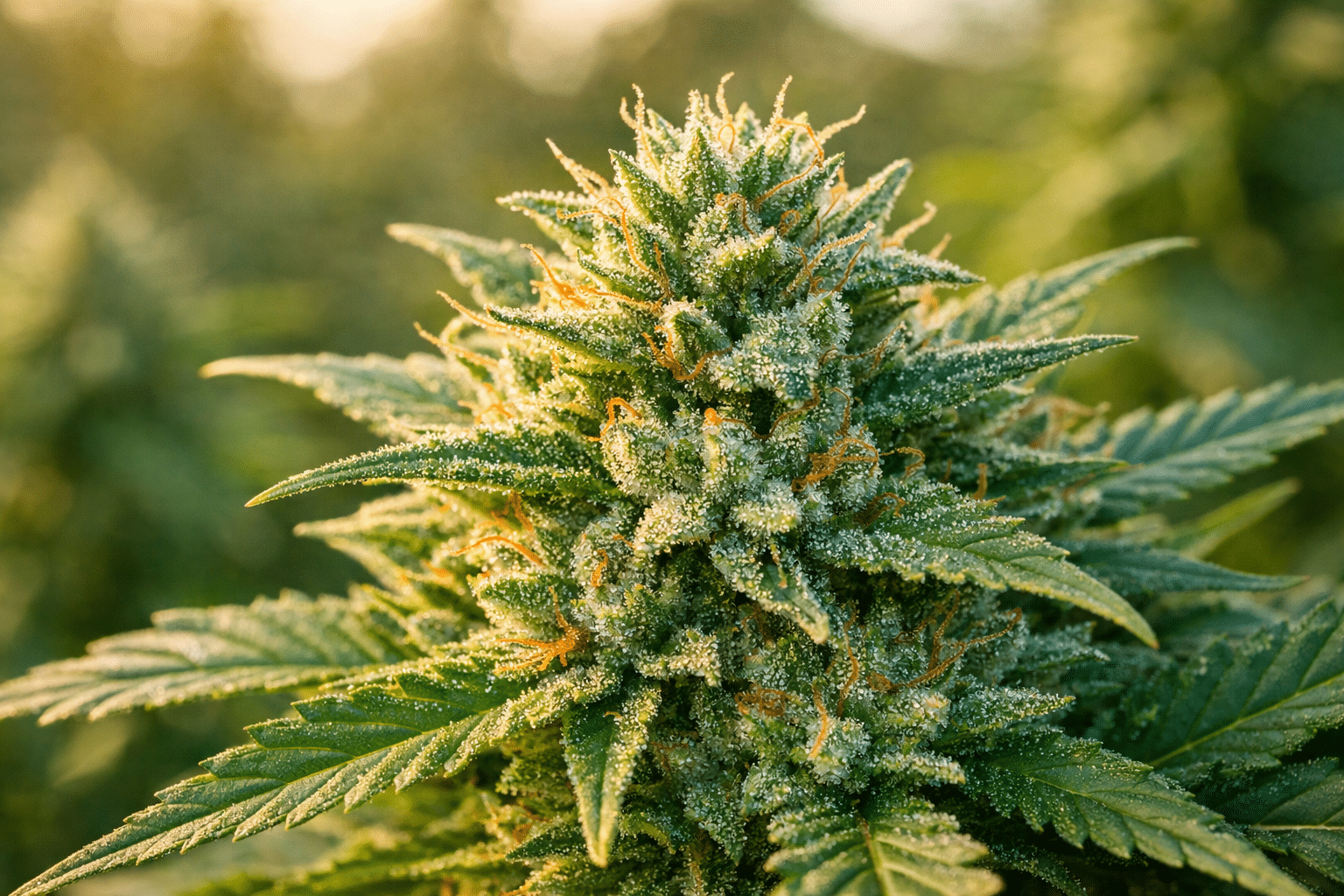
In the hemp plant, CBD is primarily produced in the trichomes, tiny resin glands located on the female flowers. These microscopic structures are responsible for the production and storage of cannabinoids, as well as terpenes and flavonoids. Hemp flowers are therefore the part of the plant richest in cannabinoids. When the plant reaches maturity, the trichomes become particularly abundant and produce a resin rich in active compounds. This resin is then used to produce various CBD extracts for the hemp industry.
The biosynthesis of CBD in cannabis
The production of cannabidiol in the cannabis plant relies on a biological process called cannabinoid biosynthesis. It all begins with a precursor molecule called CBGA, or cannabigerolic acid. This molecule is often considered the parent molecule of cannabinoids. Through the action of certain enzymes present in the plant, CBGA can be transformed into various acidic cannabinoids. These transformations include the formation of THCA and CBDA. CBDA is the direct precursor of cannabidiol. When the plant is heated or dried, CBDA undergoes a process called decarboxylation, which transforms it into CBD. This explains why heat plays an important role in activating the cannabinoids present in hemp.
The biological role of CBD in the plant
In nature, cannabinoids fulfill several essential functions for the cannabis plant. CBD, in particular, participates in hemp's defense mechanisms. The cannabinoid-rich trichomes act as a natural defense against certain insects and parasites. The terpenes present in hemp resin also help repel some harmful organisms. Cannabinoids can also play a role in protecting the plant against ultraviolet radiation. The trichomes form a kind of protective layer that limits the flowers' direct exposure to UV light. This protective function helps preserve the plant's reproductive structures. Cannabinoids thus contribute to the survival and adaptation of cannabis in its natural environment.
CBD-rich hemp varieties
Not all cannabis plants produce the same amounts of cannabinoids. Industrial hemp varieties cultivated in Europe are selected for their high CBD and low THC content. This genetic selection allows for the cultivation of plants that comply with current regulations regarding THC levels. Farmers use specific varieties listed in the official catalogs of the European Union. These varieties are intended for various uses, including the production of fiber, edible seeds, or cannabidiol extracts. Thanks to these genetic selections, industrial hemp is now a significant source of CBD.
CBD in the modern hemp industry
The growth of the cannabidiol (CBD) market has profoundly transformed the hemp industry. Once primarily cultivated for its textile fibers and seeds, hemp is now also harvested for its cannabinoids. CBD-rich flowers are used to produce a wide variety of products, including oils, resins, and concentrated extracts. Advances in extraction techniques have made it possible to isolate cannabidiol with great precision. These innovations have contributed to the expansion of the CBD market in Europe and worldwide. Specialty shops and CBD stores now offer a wide range of hemp-derived products.
CBD and the rediscovery of hemp's potential
Cannabidiol (CBD) plays a significant role in the modern rediscovery of hemp. For much of the 20th century, cannabis cultivation was severely restricted in many countries. However, the distinction between industrial hemp and THC-rich cannabis gradually allowed for the plant's resurgence. CBD has largely contributed to this revival by drawing attention to hemp's natural properties. Today, Cannabis sativa L. is considered a plant with multiple applications, ranging from sustainable agriculture to innovations in the wellness industry. Cannabidiol thus represents one of the symbols of hemp's return to the modern economy.


