Cannabidiol, more commonly known as CBD, is a cannabinoid naturally present in the hemp plant, Cannabis sativa L.To be used in oils, resins, vapes, or other hemp-based products, CBD must first be extracted from the plant. This extraction process involves isolating the cannabinoids contained in the flowers and trichomes to obtain a cannabidiol-rich extract. CBD extraction is a fundamental step in the hemp industry, as it determines the purity, quality, and concentration of the final product. Over the years, various extraction techniques have been developed to recover cannabinoids while preserving terpenes and other natural hemp compounds. Some methods are favored for their scientific precision and purity, while others are used for their industrial efficiency or more affordable production cost. Understanding how CBD is extracted allows for a better appreciation of the quality of products available on the market and for distinguishing between the different categories of cannabidiol extracts.
Where is CBD found in the hemp plant?
Before understanding extraction methods, it's important to know where CBD is found in the plant. Cannabidiol is primarily produced in trichomes, tiny resinous glands located on the female flowers of hemp. These trichomes contain a high concentration of active compounds, including cannabinoids, terpenes, and certain flavonoids. Hemp flowers are therefore the most commonly used part of the plant for CBD extraction. Once harvested and dried, the flowers can be processed using various techniques to separate the active molecules from the rest of the plant material. The goal of extraction is to concentrate the cannabinoids while preserving as much of the plant's natural properties as possible.
The objectives of CBD extraction
Cannabidiol extraction serves several scientific and industrial purposes. First, it allows for the separation of cannabinoids from plant matter to produce a concentrated extract. It also purifies the final product by removing certain undesirable substances present in the plant. A good extraction method must preserve the sensitive molecules of hemp, particularly the terpenes responsible for the plant's natural aromas. Manufacturers therefore seek to use processes capable of efficiently extracting CBD while preserving the chemical richness of hemp. The quality of the extraction directly influences the final composition of the product, whether it be CBD oil, a concentrated extract, or a distillate used in cartridges and vapes.
Supercritical CO₂ extraction
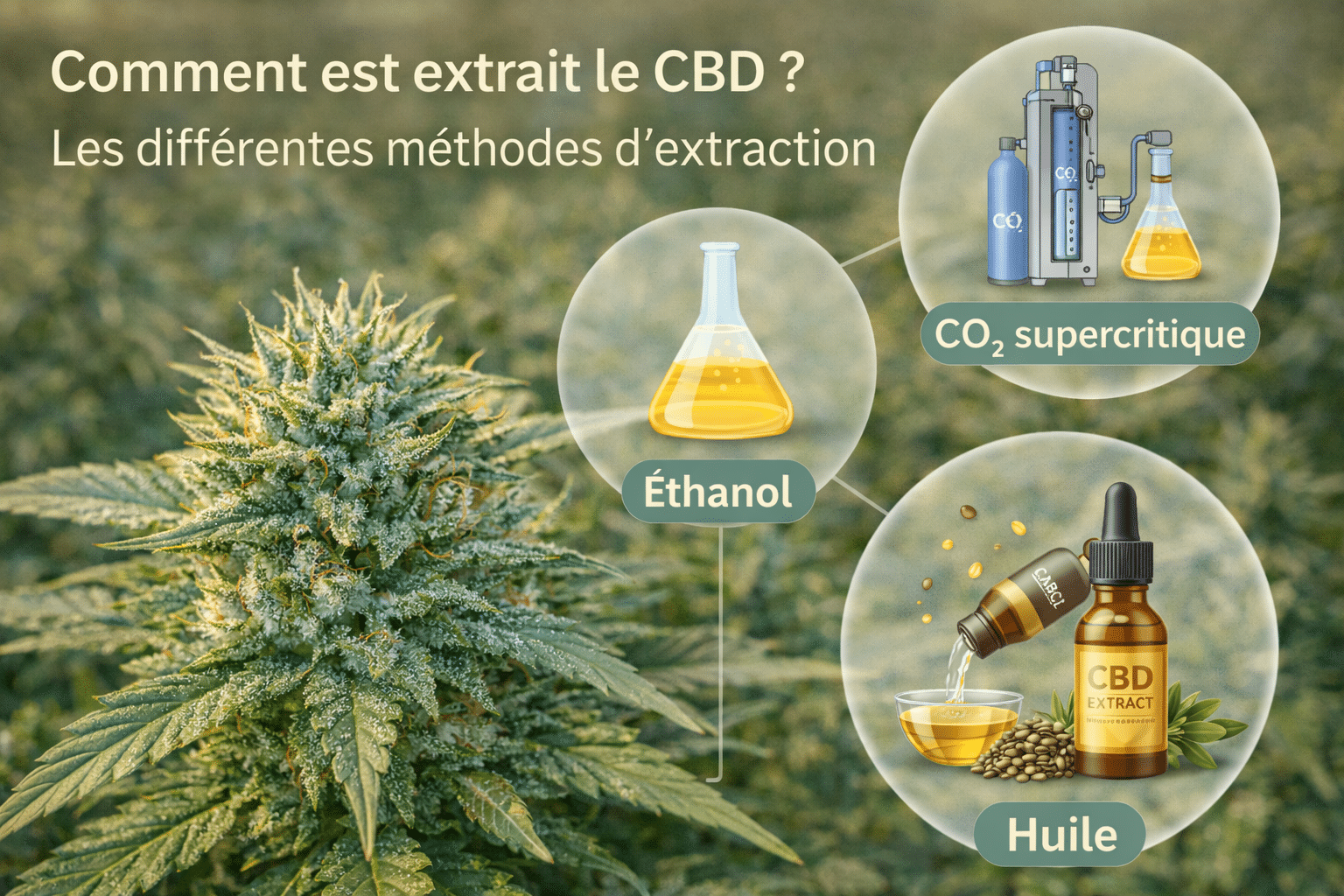
Supercritical CO₂ extraction is now considered one of the most advanced and widely used methods in the CBD industry. This technique uses carbon dioxide subjected to specific pressure and temperature to transform the CO₂ into a supercritical fluid. In this state, CO₂ possesses the properties of both a gas and a liquid, allowing it to easily penetrate plant material and dissolve cannabinoids. Hemp flowers are placed in an extraction chamber where supercritical CO₂ circulates through the plant material. The cannabinoids and terpenes are then separated from the plant and transported to a filtration system. Once the extraction is complete, the pressure is released, and the CO₂ returns to a gaseous state, leaving behind a concentrated, CBD-rich extract. This method is particularly valued because it leaves no solvent residue and yields highly pure extracts.
Ethanol extraction
Ethanol extraction is another commonly used technique for isolating CBD. This method involves using ethyl alcohol to dissolve the cannabinoids present in the plant. Hemp flowers are immersed in ethanol, which allows for the rapid extraction of the active compounds. After this step, the mixture is filtered to separate the plant material from the liquid containing the cannabinoids. The ethanol is then evaporated to obtain a concentrated extract. This method is valued for its speed and efficiency, but it can also extract other compounds present in the plant, such as chlorophyll. Therefore, additional purification steps may be necessary to improve the quality of the final extract.
Hydrocarbon extraction
Some extraction methods use hydrocarbon solvents such as butane or propane. These solvents effectively dissolve the cannabinoids and terpenes contained in the trichomes. The hemp flowers are exposed to these solvents, which capture the active compounds before they are evaporated during a purification phase. This technique can produce highly aromatic extracts because it preserves a large portion of the hemp's natural terpenes. However, it requires specialized equipment and strict control of safety conditions to avoid any risks associated with the use of flammable solvents.
Extraction by pressure and heat
Another extraction method uses pressure and heat to extract cannabinoids from the plant. This process is sometimes called mechanical extraction or rosin extraction. Hemp flowers are pressed using a heated press, which releases the cannabinoid-rich resin. This technique requires no solvents and yields a natural extract directly from the plant. While this method is more artisanal than industrial processes, it is valued for its simplicity and natural character.
The purification steps after extraction
After the initial extraction, manufacturers typically perform several purification steps to improve the quality of the extract. One commonly used technique is winterization, which involves cooling the extract to separate certain waxes and lipids present in the plant. Another important step is distillation, which allows for the precise isolation of cannabinoids. Fractional distillation can produce highly concentrated extracts called distillates, often used in oils and vape cartridges. These processes result in purer and more stable extracts.
The different types of CBD extracts
Depending on the extraction method and level of purification, there are several types of CBD extracts. Full-spectrum extracts contain all the cannabinoids and terpenes naturally present in the plant. Broad-spectrum extracts retain several cannabinoids but completely remove THC. CBD isolates, on the other hand, are very pure forms of cannabidiol that contain only a single molecule. Each type of extract has its own characteristics and can be used in various CBD product formulations.
Why the extraction method influences the quality of CBD
The method used to extract CBD plays a crucial role in the quality of the final product. Properly controlled extraction preserves the chemical richness of the hemp and guarantees the purity of the cannabinoids. Reputable manufacturers prioritize processes that ensure a high level of quality while adhering to safety and traceability standards. Laboratory analyses then verify the composition of the extracts and confirm their compliance with current regulations. CBD extraction is therefore an essential step in transforming hemp into cannabidiol-rich products available in specialty stores and CBD shops.