
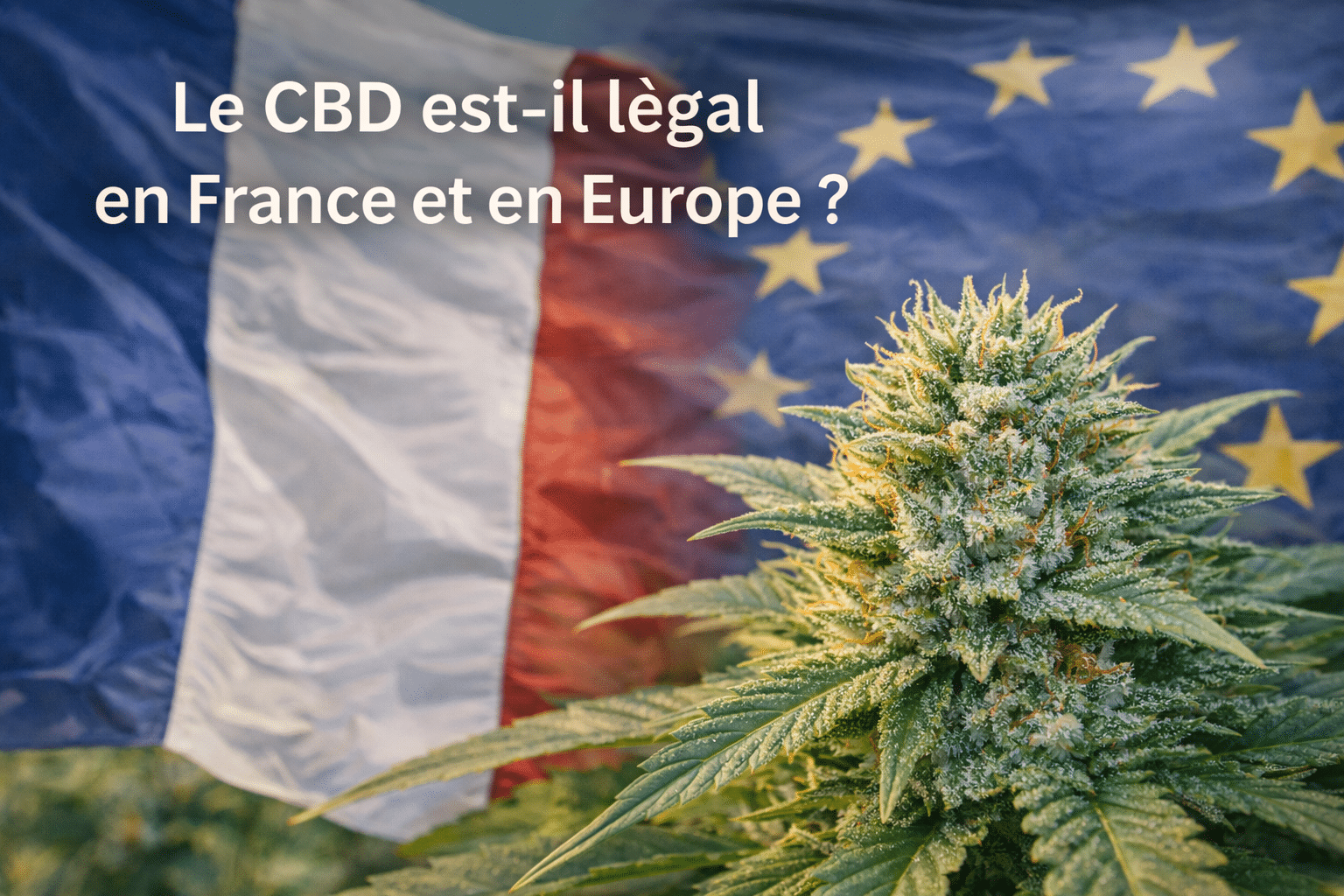
CBD, or cannabidiol, is one of the most popular cannabinoids derived from hemp today. Its increasing presence in specialty stores, CBD shops, and wellness products, however, raises a common question among consumers: is CBD legal in France and Europe? The answer depends on several legal factors related to the origin of the hemp, the THC content of the products, and European regulations. For several years, the legal framework surrounding cannabidiol has evolved to clearly distinguish products derived from industrial hemp from substances classified as narcotics. This distinction is based primarily on the presence or absence of THC, the psychoactive molecule in cannabis. Understanding CBD allows for a better understanding of the legality of hemp-based products currently available on the European market.
The legal difference between CBD and THC
To understand CBD legislation, it is essential to distinguish cannabidiol from THC. THC, or tetrahydrocannabinol, is the main psychoactive cannabinoid in cannabis. It is responsible for the psychotropic effects associated with recreational cannabis use. Because of these effects, THC is classified as a controlled substance or narcotic in many countries. CBD, on the other hand, does not have a psychoactive effect and does not alter perception. This biological difference is the basis for the legal distinction between these two cannabinoids. Cannabidiol is not considered a narcotic when it is extracted from authorized hemp varieties and complies with the legal limits for THC. This distinction forms the basis for the development of the CBD market in Europe.
The legal framework for industrial hemp in Europe
European legislation permits the cultivation of industrial hemp under certain strict conditions. Hemp varieties must belong to an official list of cultivars authorized by the European Union. These varieties have been selected to naturally contain a low concentration of THC. The maximum THC level permitted in hemp plants cultivated in Europe is generally set at 0.3%. This limit ensures that the plants do not have a psychoactive effect. European farmers can therefore cultivate hemp for various industrial applications, including the production of textile fibers, food seeds, and CBD-rich extracts. Compliance with this THC limit is essential for the legality of hemp-derived products on the European market.
The decision of the Court of Justice of the European Union
A major turning point in CBD regulation in Europe occurred in 2020 with the ruling of the Court of Justice of the European Union in the Kanavape case. In this decision, the CJEU held that cannabidiol extracted from the hemp plant could not be considered a narcotic, as it does not have a psychotropic effect. The Court also affirmed that member states cannot prohibit the marketing of CBD legally produced in another EU country unless scientific evidence demonstrates a genuine risk to public health. This decision helped clarify the legal status of CBD and strengthened the free movement of cannabidiol products within the European market.
CBD legislation in France
In France, CBD regulations are based on both European rules and national legislation. Hemp cultivation is permitted if the varieties used are listed in the official catalogue of varieties authorized by the European Union. Cultivated plants must comply with the maximum THC limit of 0.3%. Finished products sold must also adhere to this limit to guarantee the absence of psychotropic effects. Cannabidiol itself is not classified as a narcotic under French law. Products containing CBD can therefore be marketed provided they comply with current standards, particularly regarding traceability, the origin of the hemp, and the THC level. This regulation has led to the emergence of numerous shops specializing in CBD in France.
Authorized CBD products
Several types of cannabidiol (CBD) products can be legally marketed when they comply with European and French regulations. Among the most common are CBD oils, CBD flowers, CBD resins, hemp infusions, CBD cosmetics, and certain dietary supplements. Products must be made from legal industrial hemp and contain a THC concentration below the legal limit. Manufacturers and distributors must also be able to provide laboratory analyses confirming product compliance. These analyses verify the cannabinoid content and the absence of contaminants.
The role of laboratory analyses
In the CBD industry, laboratory analyses play a crucial role in ensuring product compliance. Specialized laboratories analyze product composition to precisely measure cannabinoid concentrations, including CBD and THC. These analyses confirm that products meet legal limits and do not contain undesirable substances. The results are typically presented as Certificates of Analysis (COAs). These documents provide important transparency for both consumers and regulatory authorities.
Recent developments in CBD regulation
The legal framework for CBD continues to evolve in Europe. Several discussions are underway regarding the future of industrial hemp regulations and permitted THC levels. Some professional organizations in the hemp sector have proposed increasing the THC limit in plants to facilitate cultivation and improve the genetic stability of hemp varieties. Furthermore, European institutions are working to harmonize regulations among member states to facilitate the development of the cannabidiol market. These developments could influence the future of the CBD sector in the coming years.
Why CBD is now legal in many European countries
The legalization of CBD in much of Europe is based on several scientific and economic factors. Research has shown that cannabidiol has no psychotropic effects and does not produce the effects associated with THC. This distinction has allowed for the legal differentiation of CBD products from products containing high concentrations of THC. Furthermore, the growth of the industrial hemp market has encouraged many countries to support the development of this agricultural and industrial sector. Today, CBD has become a dynamic economic sector that continues to develop across Europe.
The CBD market in Europe
The CBD market is experiencing rapid growth in Europe. More and more consumers are interested in cannabidiol-based products, particularly CBD flowers, oils, and resins derived from hemp. This growth is accompanied by a professionalization of the sector, with higher quality standards, stricter controls, and greater transparency regarding product origin. CBD shops and specialized stores are actively participating in this evolution by offering products that comply with European regulations and by informing consumers about the characteristics of cannabidiol. The development of the CBD market thus reflects the gradual return of hemp to the European economy after several decades of restrictions.