
-
-
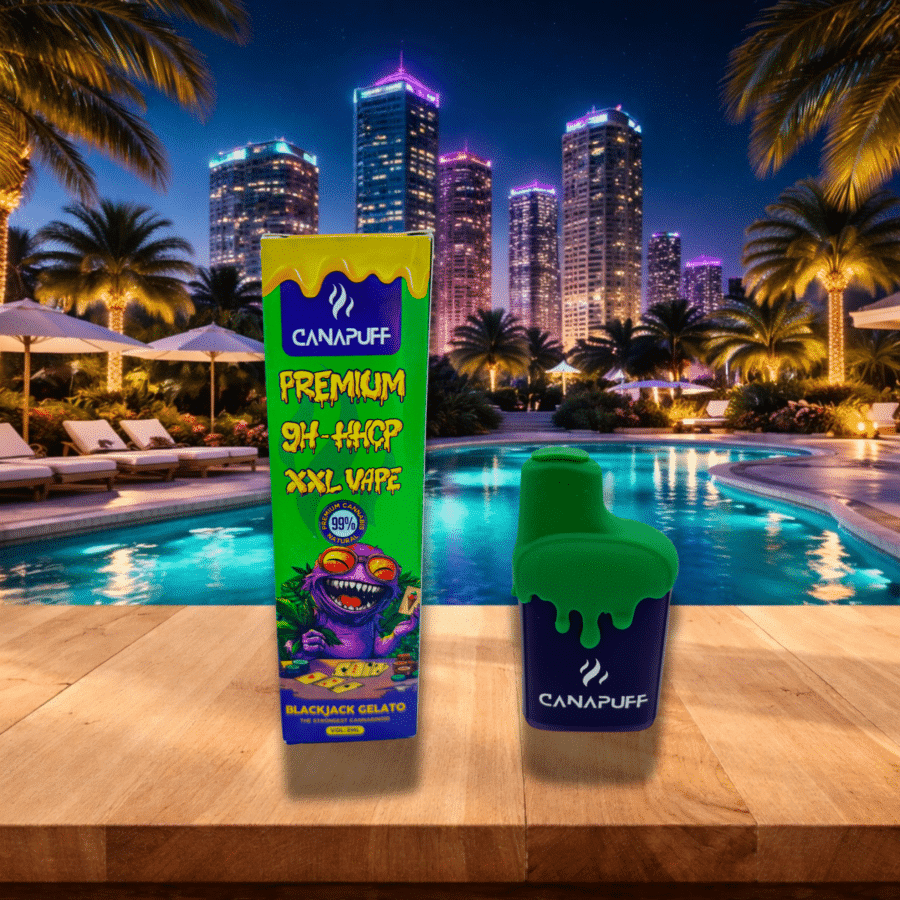 Vape 2ml 9H-HHCP Blackjack Gelato High Effect Canapuff FREE THCPower :Starting from €54.90 Add to cart
-
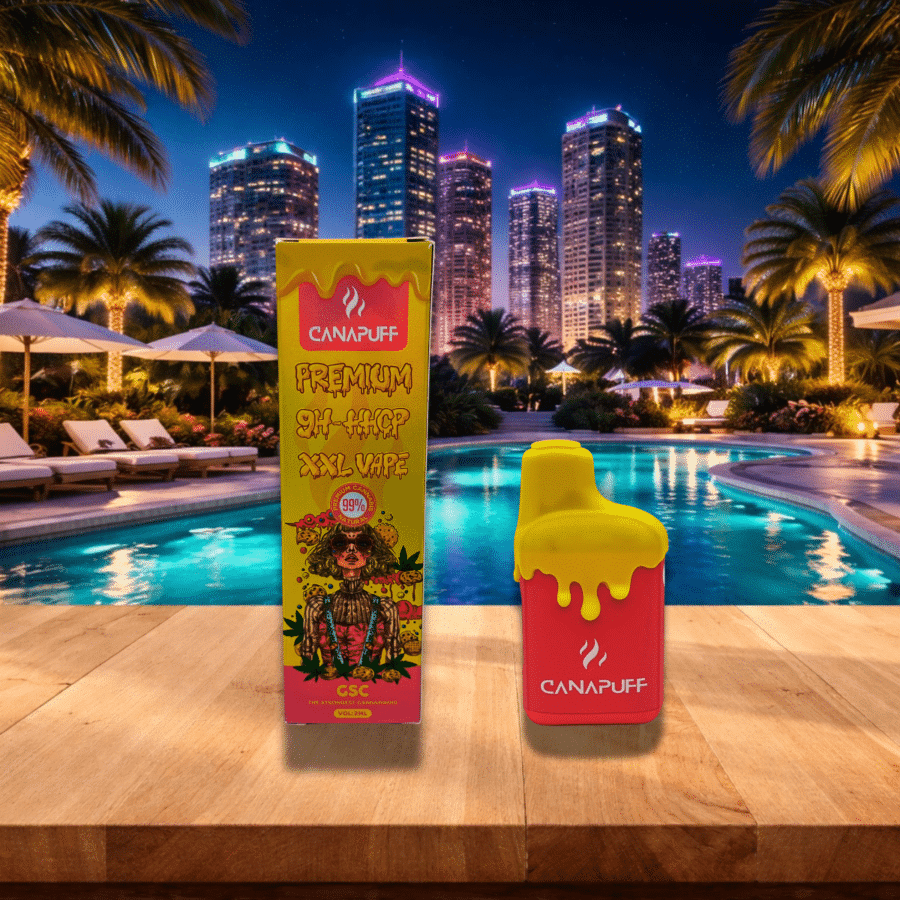 Vape 2ml 9H-HHCP Girl Scoot Cookies High Effect Canapuff FREE THCPower :Starting from €54.90 Add to cart
-
Exhausted
-
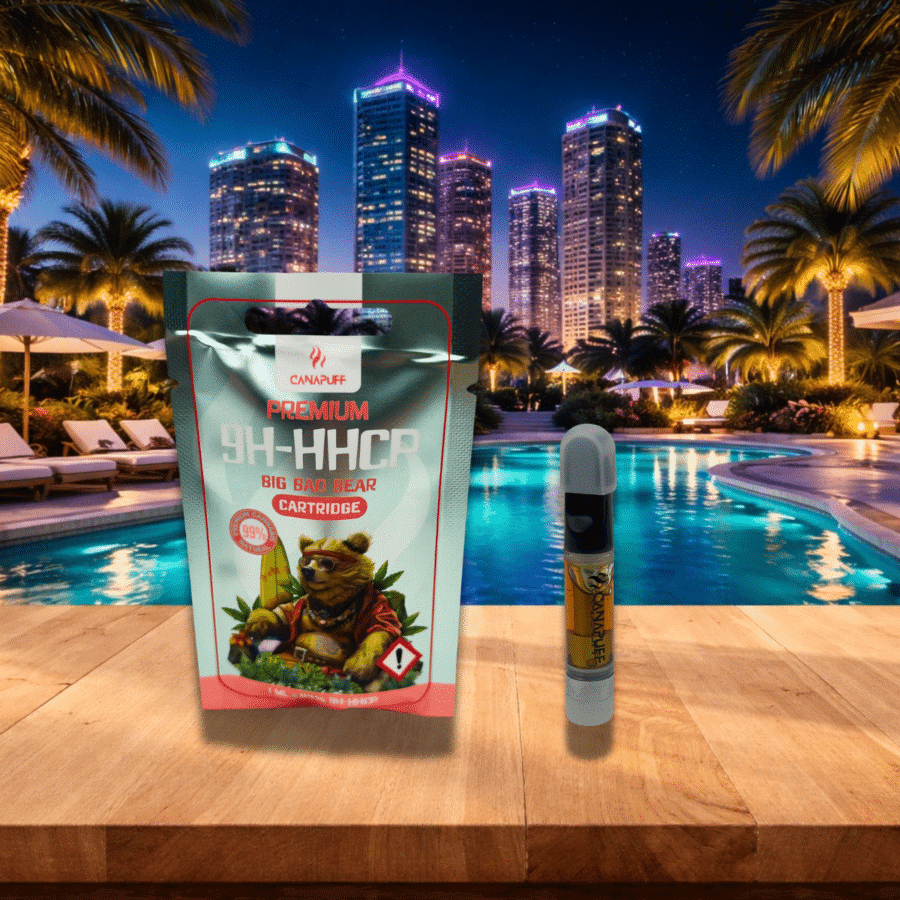
Exhausted
-
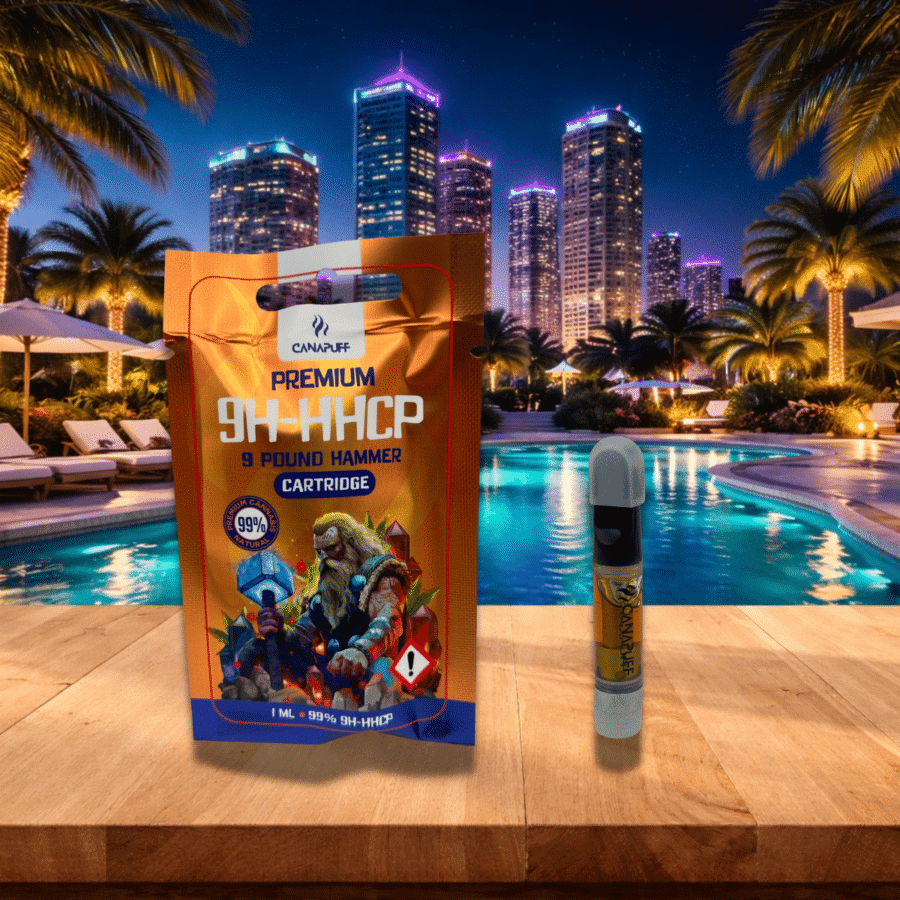
Exhausted
-
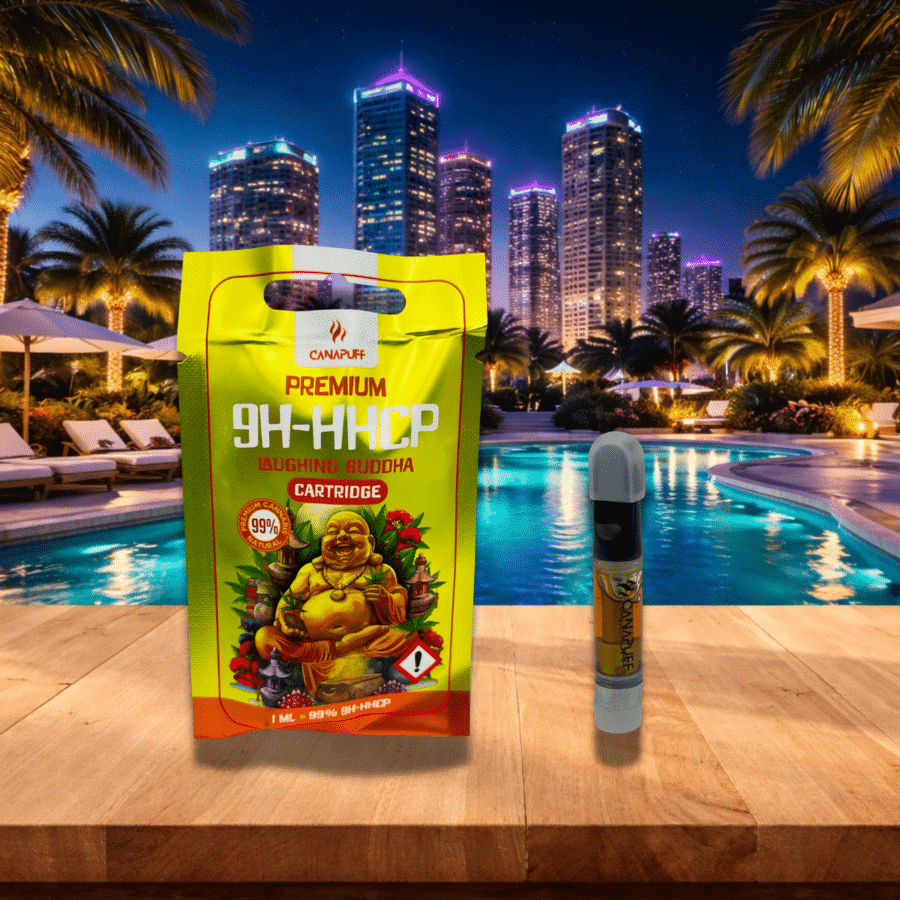
Exhausted


9H-HHCP: What is this new cannabinoid?
The world of cannabinoids is no longer limited to CBD and THC. For several years, the market has seen the emergence of new molecules and formulations designed to offer different profiles in terms of intensity, duration, and sensations.
The 9H-HHCP is part of this evolution.
Its name is reminiscent of HHCP, a cannabinoid belonging to the family of hydrogenated compounds associated with THC. However, it is essential not to automatically consider 9H-HHCP, HHCP, HHC, or THC as equivalent molecules.
For a consumer, the trade name of a cannabinoid is not sufficient to precisely determine its structure, pharmacological activity, or potency.
The first thing to look at is therefore the exact composition of the product.
What are the effects of 9H-HHCP?
9H-HHCP is primarily marketed for its psychoactive properties. It therefore falls into a very different category from traditional products that are exclusively rich in CBD.
Depending on the formulation and individual characteristics of the user, the effects sought or reported around this type of cannabinoid may include a feeling of deep relaxation, euphoria, altered perceptions, a feeling of bodily heaviness or even an alteration of attention.
However, these feelings do not constitute a guarantee.
The effects of psychoactive cannabinoids vary considerably from person to person.
The same amount can produce a relatively mild experience in an experienced consumer and become much more intense in someone with a low tolerance.
That is why 9H-HHCP should be reserved for experienced users.
A potentially powerful cannabinoid
The search for intensity is generally one of the main reasons why consumers are interested in new cannabinoids.
But power and quality should never be confused.
A particularly potent cannabinoid is not necessarily superior to another. On the contrary, high potency implies greater caution regarding the quantities used.
In the case of 9H-HHCP, there is not enough independent scientific data to establish a reliable scale to claim that it is precisely two, five, ten or twenty times more potent than another cannabinoid.
The numerical comparisons that can be found on the Internet should therefore be interpreted with great caution.
Experience depends in particular on:
- of the actual concentration of 9H-HHCP;
- of the quantity used;
- of the overall composition of the product;
- of the possible presence of other cannabinoids;
- of the usage instructions;
- of the user's metabolism;
- of his individual sensitivity;
- of its tolerance to psychoactive cannabinoids.
This variability explains why a gradual approach remains essential.
9H-HHCP and CBD: two very different experiences
CBD and 9H-HHCP should not be confused.
Cannabidiol is a cannabinoid naturally present in hemp that does not generally produce the intoxicating effects characteristic of THC.
9H-HHCP, on the other hand, is offered for a significantly more pronounced psychoactive.
This difference is fundamental.
A user accustomed to CBD flowers, CBD oils or CBD resins should not consider their tolerance to cannabidiol as a reliable reference for determining their sensitivity to 9H-HHCP.
The two product categories must be approached differently.
CBD
CBD is primarily sought after for its low-intoxication properties. It also benefits from a significantly more extensive body of scientific literature.
9H-HHCP
9H-HHCP belongs to a much more recent category. Its use is associated with the search for psychoactive effects, and scientific knowledge regarding its safety profile remains limited.
This difference justifies increased precautions.
9H-HHCP, HHCP and HHC: what are the differences?
Similar names can easily create confusion.
HHC , or hexahydrocannabinol, enjoyed great popularity on the European market before its classification as a narcotic in France in 2023 .
HHCP is another molecule in the hydrogenated cannabinoid family, with a different side chain .
The term 9H-HHCP refers to a more recent reference whose trade name should not be used as the sole source for determining the chemical characteristics of the product.
This distinction is important for a simple reason: two cannabinoids with similar names can have different properties.
Therefore, one should never automatically extrapolate the available knowledge on HHC or HHCP to 9H-HHCP.
9H-HHCP and THC: are they the same thing?
No.
Δ9 -THC, or delta-9-tetrahydrocannabinol, is the main intoxicating cannabinoid naturally present in cannabis.
9H-HHCP is marketed under a different name and should not be presented as Δ9-THC under another name.
However, they belong to the same universe of psychoactive cannabinoids, which explains some potential similarities in the sensations sought.
This does not mean that their effects, potency, duration of action, or metabolism are identical.
The available data concerning THC is considerably greater than that concerning emerging cannabinoids such as 9H-HHCP.
How long do the effects of 9H-HHCP last?
It is impossible to provide a reliable universal duration.
The duration of the effects of a cannabinoid depends on many parameters: concentration, quantity, formulation, method of administration, metabolism and tolerance.
With particularly concentrated psychoactive cannabinoids, one rule of caution is important: do not quickly take an additional amount under the pretext that the effects seem insufficient.
Some usage patterns may present a gradual onset. Repeated use too soon can cause a build-up and lead to a much more intense experience than expected.
This precaution is particularly relevant for people new to 9H-HHCP.
Why start gradually with 9H-HHCP?
Caution is probably the most important point when discovering a psychoactive cannabinoid.
There is no universal quantity suitable for all consumers.
Sensitivity to cannabinoids varies considerably.
An experienced person may have a high tolerance while an occasional user may strongly feel a much smaller amount.
It is therefore preferable to adopt a gradual approach rather than immediately seeking maximum experience.
This rule also allows for a better assessment of one's personal sensitivity.
What side effects can occur?
As with other psychoactive substances, excessive exposure can lead to unpleasant sensations.
Depending on the individual and the product used, an overly intense experience may be accompanied by:
- drowsiness;
- dizziness;
- difficulty concentrating;
- feeling of disorientation;
- anxiety ;
- accelerated heart rate;
- dry mouth;
- nausea;
- decreased vigilance;
- impaired coordination.
This list does not constitute an exhaustive description of the effects specific to 9H-HHCP, as specific toxicological data remain insufficient.
It is precisely this lack of perspective that justifies a cautious approach.
Why are laboratory analyses important?
For new cannabinoids, traceability is an essential criterion.
The percentage displayed on a product page should not be the only information available.
An analysis carried out by a laboratory can, depending on the methodology used, make it possible to control the cannabinoid profile of a product and to look for certain contaminants.
This approach is of particular importance for emerging cannabinoids.
The actual composition can indeed vary greatly between two products bearing a similar name.
When choosing a product containing 9H-HHCP, therefore, favor a reference whose composition is clearly indicated.
9H-HHCP: for what type of consumer?
Given its potential psychoactive nature, 9H-HHCP is intended exclusively for an adult and informed audience.
Individuals who are particularly sensitive to psychoactive cannabinoids should exercise extra caution.
This product should not be considered equivalent to a classic CBD flower.
The desired experience is different, and the level of vigilance must be different as well.
The product must also be kept in its original packaging, properly closed and placed out of reach of children and animals.
Can 9H-HHCP be combined with alcohol?
Combining with alcohol is not recommended.
Both alcohol and psychoactive cannabinoids can affect alertness, coordination, and perception.
Their combination can make the effects much more difficult to anticipate.
This precaution also applies to combination with other psychoactive substances.
With an emerging cannabinoid for which interactions are still poorly documented, limiting mixtures is a basic precautionary measure.
9H-HHCP and medications
Drug interactions specific to 9H-HHCP are insufficiently documented.
This does not mean that they do not exist.
Cannabinoids can interact with various metabolic pathways and certain medications. Therefore, it would be unwise to claim that a newly identified cannabinoid poses no risk of interaction simply because no study has yet precisely identified it.
If you are taking medication, seek advice from a healthcare professional before using a psychoactive cannabinoid.
This recommendation is particularly important in the case of treatment that may affect alertness or the central nervous system.
9H-HHCP and driving: a simple rule
Never drive after using 9H-HHCP.
This rule should be applied even when you feel you are no longer experiencing significant effects.
A psychoactive cannabinoid can alter:
- reflexes;
- vigilance;
- perception;
- coordination;
- the ability to assess a situation;
- reaction time.
Driving and handling potentially dangerous machinery should therefore be avoided after use.
The issue of roadside checks is also a major point. The actual composition of the product, the possible presence of THC, and the metabolism of the different cannabinoids can complicate the interpretation of the risk of a positive test.
The absence of psychoactive sensations should never be considered a guarantee of being able to drive safely.
Is 9H-HHCP legal in France?
Regulation is a particularly sensitive issue for new cannabinoids.
In France, several cannabinoids that have appeared on the market have been classified as narcotics. HHC, HHCO, and HHCP, in particular, were classified by the ANSM in 2023.
Other substances were subsequently subject to new regulatory decisions.
Therefore, the legality of a product cannot be determined solely from a general statement such as "legal cannabinoid".
In the case of a name such as 9H-HHCP, it is imperative to examine the exact chemical structure of the substance, its composition and the regulatory texts applicable at the time the product is marketed.
The mere fact that a trade name is different from that of an already classified substance does not constitute proof of legality.
Similarly, compliance with a Δ9-THC level of less than 0.3% is not necessarily sufficient to make a product legal if it also contains a cannabinoid classified as a narcotic.
As French regulations on neo-cannabinoids are evolving rapidly, the product's status must therefore be checked regularly.
Why is the THC level not enough?
The 0.3% THC limit is frequently used when talking about hemp-derived products authorized in France.
But this rule is sometimes misunderstood.
A product does not automatically become compliant simply because it contains less than 0.3% of Δ9-THC.
It is also necessary to check the other substances that make up its composition.
If a formulation contains a cannabinoid explicitly classified as a narcotic, a low level of THC does not circumvent this prohibition.
For new cannabinoids like 9H-HHCP, regulatory analysis of the exact molecule therefore remains essential.
How to recognize a quality 9H-HHCP product
Transparency is one of the best selection criteria.
A reputable product should provide as much information as possible about its composition.
It is particularly important to check:
the stated concentration, the list of cannabinoids present, the nature of the formulation, traceability information and available laboratory analyses.
Beware of arguments based solely on power.
Claims such as "30 times more potent than THC" or "the most potent cannabinoid on the market" require solid scientific evidence.
In the field of new cannabinoids, these comparisons are frequently extrapolated from theoretical data, related molecules, or user testimonials.
They should not be presented as scientific facts when they are not proven.
9H-HHCP in the world of new cannabinoids
The emergence of 9H-HHCP demonstrates the rapid pace at which the cannabinoid market is evolving.
CBD, CBG, CBN, THC and emerging cannabinoids constitute a particularly vast universe today.
But not all have the same level of scientific documentation.
CBD and THC have been the subject of decades of research. Conversely, some new molecules recently brought to market have very little independent data regarding their toxicity, metabolism, or long-term effects.
This difference must be clearly explained to consumers.
A new product may be interesting for an experienced user looking for a new experience, but this newness also implies more uncertainty.
9H-HHCP: Information, transparency and responsible use
9H -HHCP is part of the new generation of psychoactive cannabinoids sought after for stronger sensations than those generally associated with CBD.
However, its recent nature necessitates a responsible approach.
Unproven power comparisons, excessive promises, and medical claims should be avoided.
For the consumer, three criteria must remain priorities: understanding what they are buying, checking the composition of the product and remaining cautious about the quantities used.
The world of cannabinoids is evolving rapidly. The quality of information is therefore becoming as important as that of the product itself.
Important information
This product is for adult use only. Keep out of reach of children and animals. Not recommended for pregnant or breastfeeding women. Do not combine with alcohol or other psychoactive substances. If you are taking medication or have any doubts, consult a healthcare professional. Do not drive or operate dangerous machinery after use. Scientific data regarding the effects, toxicology, and long-term risks of 9H-HHCP remain limited.


