
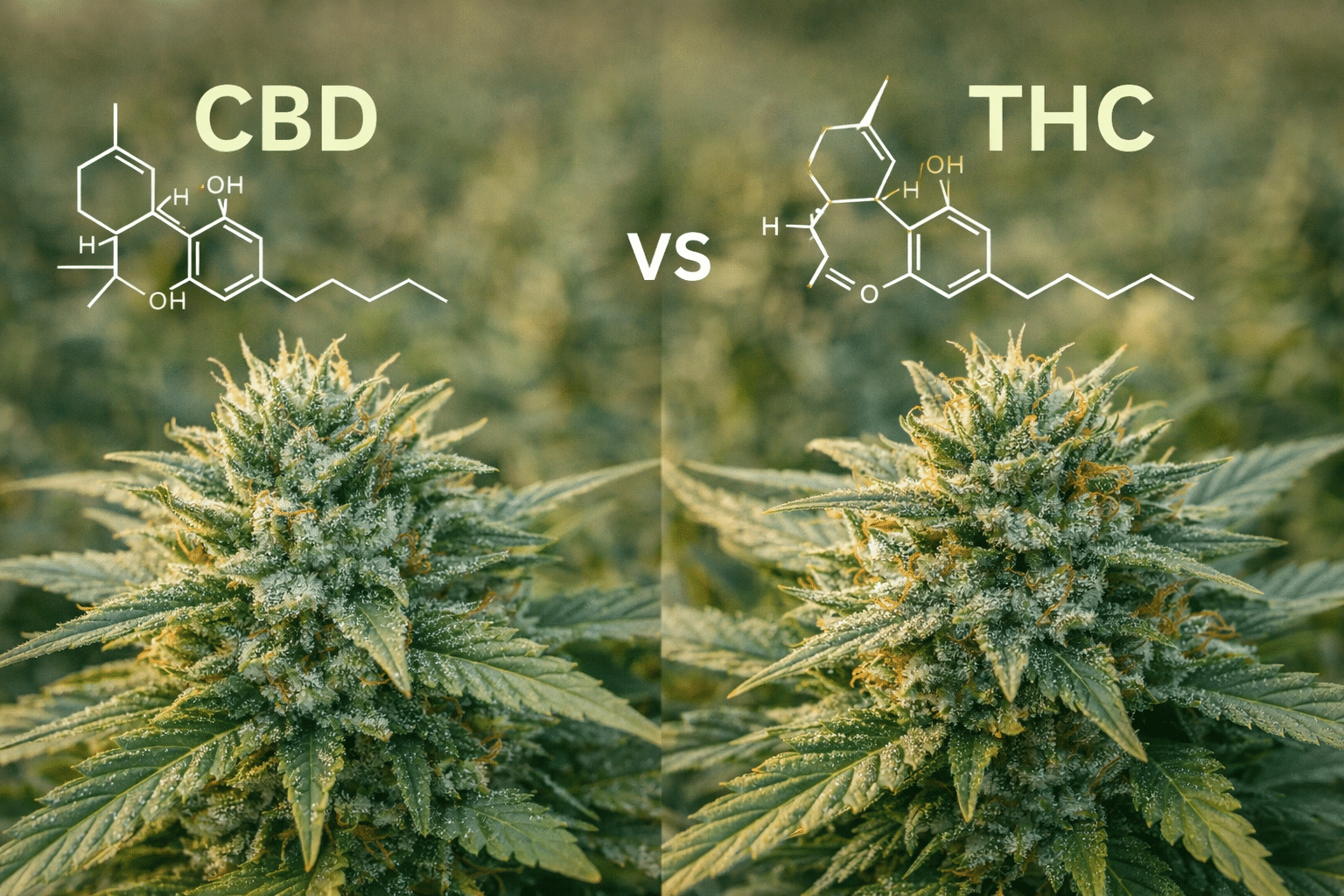
Cannabis is a complex plant containing a wide variety of natural compounds called cannabinoids. Of the more than 140 cannabinoids identified in the hemp plant Cannabis sativa L., two molecules are particularly noteworthy: CBD (cannabidiol) and THC (tetrahydrocannabinol). These two cannabinoids come from the same plant, have a similar chemical structure, and are produced in the same resinous glands called trichomes. However, their effects on the human body and their legal status are profoundly different. THC is primarily known for its psychoactive effects associated with recreational cannabis, while CBD is a non-psychoactive cannabinoid widely used in industrial hemp products. Understanding the differences between CBD and THC provides a better understanding of how cannabis works, hemp regulations, and the role of these molecules in the modern CBD industry.
What is a cannabinoid?
Cannabinoids are natural molecules produced by the cannabis plant. They are primarily synthesized in trichomes, small resinous glands located on the female flowers of the hemp plant. These chemical compounds play an important biological role for the plant, notably in its protection against certain insects, parasites, and ultraviolet radiation. Cannabinoids also have the unique ability to interact with a biological system present in the human body called the endocannabinoid system. This system is involved in regulating numerous physiological functions, such as the body's internal balance, sleep, mood, and certain immune responses. Among the many cannabinoids identified in cannabis, THC and CBD are the most studied by researchers.
What is THC?
THC, or tetrahydrocannabinol, is the main psychoactive cannabinoid found in the cannabis plant. This molecule is responsible for the psychotropic effects associated with recreational cannabis use. THC acts primarily by binding to CB1 receptors in the endocannabinoid system, which are particularly abundant in the brain and central nervous system. This interaction alters certain neurological signals and can produce various sensory and cognitive effects. The effects associated with THC can include a feeling of euphoria, altered perception of time, mental relaxation, and appetite stimulation. Due to its psychoactive effects, THC is classified as a controlled substance or narcotic in many countries.
What is CBD?
CBD, or cannabidiol, is another major cannabinoid found in the hemp plant. Unlike THC, CBD has no psychoactive effects and does not produce a euphoric state. Cannabidiol acts differently on the endocannabinoid system. Rather than binding directly to CB1 receptors, CBD acts as an indirect modulator of the endocannabinoid system. This subtle interaction explains why cannabidiol is generating increasing interest in the wellness and scientific research fields. CBD is now used in many industrial hemp-derived products, including CBD flowers, resins, oils, and various concentrated extracts.
Chemical differences between CBD and THC
From a chemical standpoint, CBD and THC share the same molecular formula, C21H30O2. However, the arrangement of atoms in these two molecules differs slightly. This variation in their three-dimensional structure alters how the molecules interact with the receptors of the endocannabinoid system. THC has a molecular configuration that allows it to bind directly to CB1 receptors in the brain. CBD, on the other hand, does not bind directly to these receptors but rather acts by modulating their activity. This structural difference explains why the two molecules produce such different effects despite their similar chemical composition.
CBD vs THC: differences in effects on the body
The most significant difference between CBD and THC lies in their effects on the human body. THC is known for its psychoactive effects. When it binds to CB1 receptors in the brain, it can cause alterations in perception, mood, and certain cognitive functions. These effects are the basis for the recreational use of cannabis. CBD, on the other hand, does not produce these types of psychotropic effects. Cannabidiol interacts indirectly with the endocannabinoid system and does not alter sensory perception. This lack of psychoactive effects is one of the main reasons for the rapid growth of the CBD market.
CBD vs THC in the hemp plant
In the cannabis plant, CBD and THC are produced from a common precursor molecule called CBGA, or cannabigerolic acid. This compound is often considered the parent molecule of cannabinoids. Under the action of certain enzymes present in the plant, CBGA can be converted into several acidic cannabinoids, including THCA and CBDA. THCA is the precursor to THC, while CBDA is the precursor to CBD. When these acidic molecules are heated or dried, they undergo a process called decarboxylation, which transforms them into the active compounds THC and CBD. Industrial hemp varieties are bred to produce more CBDA and very little THCA, resulting in plants that are high in CBD and low in THC.
The legal differences between CBD and THC
The distinction between CBD and THC is also important from a legal standpoint. In many European countries, THC is considered a narcotic when it exceeds certain concentrations. However, the cultivation of industrial hemp is permitted when the varieties used contain a very low concentration of THC. In Europe, the THC limit in industrial hemp is generally set at 0.3%. CBD products must comply with this limit to ensure the absence of psychoactive effects. Cannabidiol itself is not classified as a narcotic when extracted from authorized hemp varieties and the final product complies with the legal THC limit.
The entourage effect and the interaction between cannabinoids
Cannabis contains more than just CBD and THC. The plant also produces numerous other cannabinoids, terpenes, and flavonoids. These compounds can interact with each other in what researchers call the entourage effect. This theory suggests that the different compounds in cannabis can act synergistically when present together. Full-spectrum retain a large portion of these natural compounds, while CBD isolates contain only purified cannabidiol. This chemical diversity contributes to the complexity of cannabis and the growing scientific interest in cannabinoids.
Why understanding the difference between CBD and THC is essential
Understanding the differences between CBD and THC is essential for a better grasp of the world of hemp and cannabis. These two molecules share a common origin but have very different effects and applications. THC is primarily associated with the recreational use of cannabis due to its psychoactive effects. CBD, on the other hand, is a non-psychoactive cannabinoid that is part of the growing market for industrial hemp and cannabidiol-based products. This fundamental distinction explains why CBD is now widely used in legal hemp products and why it is generating increasing interest in many sectors related to wellness and scientific research.


