

CBD can alleviate some symptoms of stress and anxiety, but only at specific doses and according to precise protocols. Clinical trials show encouraging results for acute anxiety, with significant limitations regarding chronic use. The rest of this guide details the forms, gradual dosage adjustments, and safety criteria for its proper use.
In short:
- High oral doses of 300 to 600 mg are needed for a significant anxiolytic effect when taken once, but these amounts generally exceed those recommended for daily use.
- Clinical trials have primarily validated the effectiveness of CBD on acute anxiety in a controlled setting, without guarantees for prolonged effectiveness or with regular use.
- The speed of action of CBD depends on the form used, with vaporization or the flower for an immediate effect, versus an oil or an infusion for background support.
- Gradual intake, starting with 5-10 mg per day, is the best method to adjust the dosage according to individual response and limit side effects.
- Product quality, including certification by an independent laboratory and traceability, is essential to ensure safe and effective use against stress.
Table of Contents
- How CBD works on stress: SEC, 5-HT1A receptors and cortisol
- What do clinical studies really say about CBD and anxiety?
- Which form of CBD should I choose to combat stress?
- What CBD dosage is best for managing daily stress?
- CBD and stress: what side effects and interactions should you watch out for?
- How to recognize a reliable CBD product for stress?
- Perspective: Why selection matters more than brand
- Infusions and prerolls designed to support your stress management
- Sources
- Frequently Asked Questions
How CBD works on stress: SEC, 5-HT1A receptors and cortisol
Cannabidiol does not act like a benzodiazepine, which floods a single receptor. It modulates several systems at once, which explains both its potential and the difficulty in precisely measuring its effect.
The endocannabinoid system (ECS) regulates mood, stress response, and overall homeostasis through its CB1 and CB2 receptors, found in the brain and immune system. CBD does not bind directly to these receptors like THC; rather, it acts by modulating their activity and inhibiting the breakdown of anandamide, an endocannabinoid sometimes called the "happy molecule" for its role in mood regulation.
CBD also interacts with the 5-HT1A receptor, a target involved in serotonin regulation. This mechanism largely explains its anxiolytic profile observed in clinical trials and laboratory studies, alongside its action on the TRPV1 receptor involved in the perception of pain and physical stress.
From a physiological standpoint, some data suggests that CBD influences reactivity to cortisol, the hormone released during an acute stress response. Specifically:
- CBD does not block cortisol production, but may lessen the intensity of the physiological response to a one-off trigger.
- The action on 5-HT1A brings its profile closer to that of some mild anxiolytics, without the marked sedative effects.
- The effect varies greatly from person to person depending on metabolism, weight and individual sensitivity to cannabidiol.
- The distinction between acute stress (an exam, a speech) and chronic anxiety remains crucial for the observed effectiveness.
The key figure to remember : the majority of trials demonstrating a measurable anxiolytic effect used acute oral doses of between 300 and 600 mg in a single dose, amounts far exceeding the daily dosages usually recommended for preventive use. This inter-individual variability explains why two people taking the same dose can experience very different effects, and why a gradual protocol remains the only sensible approach.
What do clinical studies really say about CBD and anxiety?
The available systematic reviews paint a nuanced picture: CBD works, but mainly in a specific experimental setting, not yet validated for long-term chronic use.
The most robust trials have tested high single doses, between 300 and 600 mg, in healthy volunteers or patients with social anxiety disorder (SAD), with a measurable reduction in experimental anxiety during stressful laboratory tasks. These results, documented in a review of CBD's therapeutic efficacy, constitute the most cited basis in the current scientific literature on the subject.
The limits need to be clearly defined:
- Sample sizes often remain small, sometimes only a few dozen participants.
- Most protocols test a single dose, rarely daily use over several months.
- The doses studied in the laboratory (300 to 600 mg) far exceed those sold and consumed daily by the majority of users.
- Few trials compare different galenic forms (oil, gummies, flowers) with each other for the same anxiolytic objective.
A summary published by Insermin its Canal Détox section reminds us that CBD is very widely used for self-medication against stress in France, but that the lack of large-scale trials over long periods calls for caution in the face of overly ambitious commercial promises.
Evidence of CBD's effectiveness for anxiety primarily relates to acute, one-time dose protocols in controlled experimental settings. Generalization for daily, long-term use by the general public is based on much more limited data, although millions of people report experiencing subjective improvement.
For a beginner, these figures have a simple practical application: they confirm a real mechanism of action, but they don't guarantee that a small daily dose will reproduce the effects observed in the laboratory at high doses. Personal testing, guided by a gradual protocol, remains the only reliable way to know what CBD actually does for your own body.
Which form of CBD should I choose to combat stress?
The choice of form depends primarily on one criterion: do you need a quick effect in the face of a specific situation, or long-term support against diffuse and recurring stress?
Sublingual oil and spray remain the gold standard for precise dosage. Placed under the tongue and held for 60 to 90 seconds before swallowing, the oil passes partially into the bloodstream, accelerating the onset of effects compared to conventional digestion.
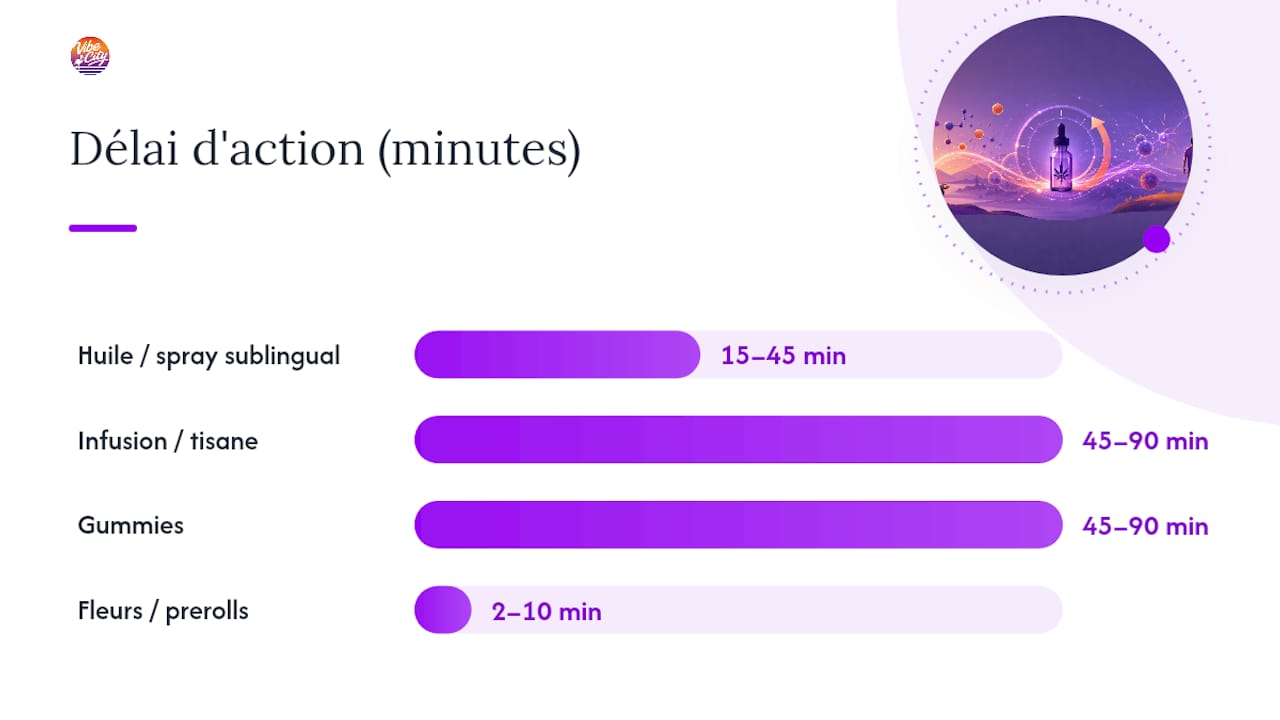
Ingested products, such as infusions or gummies, pass through the digestive system and liver before taking effect, which delays the onset of effects but generally prolongs their duration. This is the preferred format for daily preventative use, especially in the form of herbal tea, which is gentler than concentrated oil and often chosen by those who prefer to avoid ingesting oily products.
Flowers and vapes offer the fastest absorption via the lungs, but they expose users to greater dose variability from one inhalation to the next, as well as respiratory risks related to combustion or repeated vaporization.
| Shape | Action deadline | Duration of effects | Recommended use |
|---|---|---|---|
| Sublingual oil/spray | 15 to 45 minutes | 4 hours | Precise dosage, supervised daily use |
| Infusion / herbal tea | 45 to 90 minutes | 6 hours | General stress, regular preventative intake |
| Gummies | 45 to 90 minutes | 6 hours | Discreet use, fixed dosage per unit |
| Flowers / prerolls | 2 to 10 minutes | 2 to 3 hours | Quick, one-off need, occasional use |
- For an imminent peak of stress, a rapid effect matters more than the precision of the dosage.
- For underlying stress that has been present for weeks, regular and predictable intake via infusion or oil makes more sense than occasional consumption of flowers.
What CBD dosage is best for managing daily stress?
There is no universal dose: the right dosage is found through supervised trial and error, always starting low and allowing the body time to respond before adjusting.
The protocol recommended by the specialists cited in Santé Magazine follows a simple four-step logic:
- Start with 5 to 10 mg per day, ideally in a single dose in the evening or at the time identified as most conducive to stress.
- Observe for at least 3 days before making any changes, to allow time for the endocannabinoid system to adjust to the new molecule received.
- Increase in increments of 5 to 10 mg if the effect felt remains insufficient, without ever doubling the dose abruptly.
- Continue the trial for 2 to 4 weeks at a stable level before concluding that the product is totally ineffective.
Respecting the time between each dose level is not a mere administrative detail. Data reported by Healthline on CBD metabolism confirms that it generally takes 72 hours to properly assess the effect of a new dose level, the time it takes for the molecule to reach a stable level in the body.
Two profiles clearly illustrate the difference in approach. Someone simply looking to better manage everyday stress during the week can be satisfied with a stable dose of around 10 to 15 mg per day, taken as an infusion in the evening. Someone experiencing more pronounced anxiety can try increasing the dose to 25 or 40 mg per day, always gradually, keeping in mind that the doses that showed a clear effect in the laboratory (300 to 600 mg) involved occasional use and not prolonged daily use.
Pro tip: Rate your perceived stress level on a scale of 1 to 10 each evening during your trial. Without this written record, it's nearly impossible to objectively distinguish a real effect from a mere fleeting impression.
CBD and stress: what side effects and interactions should you watch out for?
CBD is generally well tolerated, but it is not without side effects or interactions, especially in people on regular medication.
The most frequently reported side effects are generally mild: fatigue, daytime drowsiness, slight digestive problems (diarrhea, nausea), and, at higher doses, a possible transient increase in liver enzymes. This last point warrants particular attention for anyone with a history of liver problems.
The main point of concern relates to drug interactions. CBD is metabolized by cytochrome CYP450 enzymes, the same family of enzymes that process many common medications. This can alter the blood concentration of certain medications, with an increased risk of:
- anticoagulants, where an interaction can increase the risk of bleeding;
- certain antiepileptic drugs, whose efficacy or toxicity may be affected;
- treatments metabolized by the liver in general, including certain antidepressants.
Pregnant or breastfeeding women and children are populations for which extreme caution is necessary, as there is insufficient safety data on these specific profiles. A child should never receive CBD without prior medical advice, regardless of the product form.
Important note : any use of CBD in the context of regular drug treatment warrants informing your doctor before starting, and stopping immediately if any unusual effect persists beyond a few days.
How to recognize a reliable CBD product for stress?
A good CBD product is judged on verifiable criteria, not marketing promises. Here's what distinguishes a reputable oil or infusion from a product about which little is known.
The Certificate of Analysis (COA), issued by an independent laboratory, must indicate the exact CBD content, the residual THC level, and the absence of contaminants (heavy metals, pesticides, solvents). Without this accessible document, it is impossible to verify the actual contents of the bottle or sachet. French authorities, in their Mildeca report on CBD, emphasize the importance of this traceability to guarantee compliance with the legal THC threshold.
The product's spectrum also changes the experience:
- Full spectrum : retains all the cannabinoids and terpenes of hemp, which can enhance the entourage effect, but leaves traces of THC.
- Broad spectrum : retains the richness of terpenes without detectable THC, a compromise appreciated by those subjected to professional testing.
- Isolate : Pure CBD at over 99%, without any other hemp compounds, for targeted and predictable action.
Supercritical CO2 extraction remains the cleanest and most reproducible method, leaving no chemical solvent residues. A quality oil will always specify its carrier oil, most often MCT oil or hemp oil, as well as the exact number of milligrams of CBD per dose on its label.
| Criteria | What you need to check |
|---|---|
| COA | Available, dated, identified independent laboratory |
| Spectrum | Full, broad or isolate, clearly indicated |
| Extraction | supercritical CO2 preferably |
| Label | mg of CBD per dose and residual THC level displayed |
Perspective: Why selection matters more than brand
The approach stems from a simple observation: most disappointments related to CBD for stress relief come less from the molecule itself than from a product that is incorrectly dosed, poorly traced, or unsuitable for its intended use. An herbal tea designed for daily preventative use and a flower intended for a one-time effect do not address the same need, and confusing them almost always leads to disappointment. This is why each selected product comes with a certificate of analysis that can be viewed, an identified hemp origin, and verified compliance before being placed on the shelves. All with fast shipping.
— Julien
Infusions and prerolls designed to support your stress management
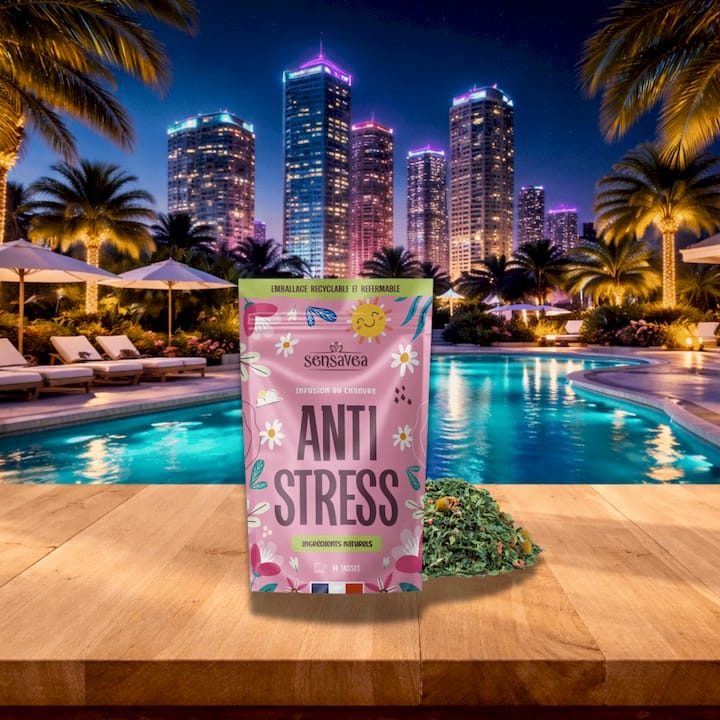
The site offers a curated selection rather than an endless catalog, with products chosen to suit the uses described above. Sensavea's 100% Organic Anti-Stress CBD Infusion and Herbal Tea is suitable for regular, gentle consumption at the end of the day to help manage general stress without resorting to concentrated oils. For evenings when tension rises more, Sensavea's 100% Organic Super Relax CBD Infusion offers a stronger formula designed for the period before bedtime.
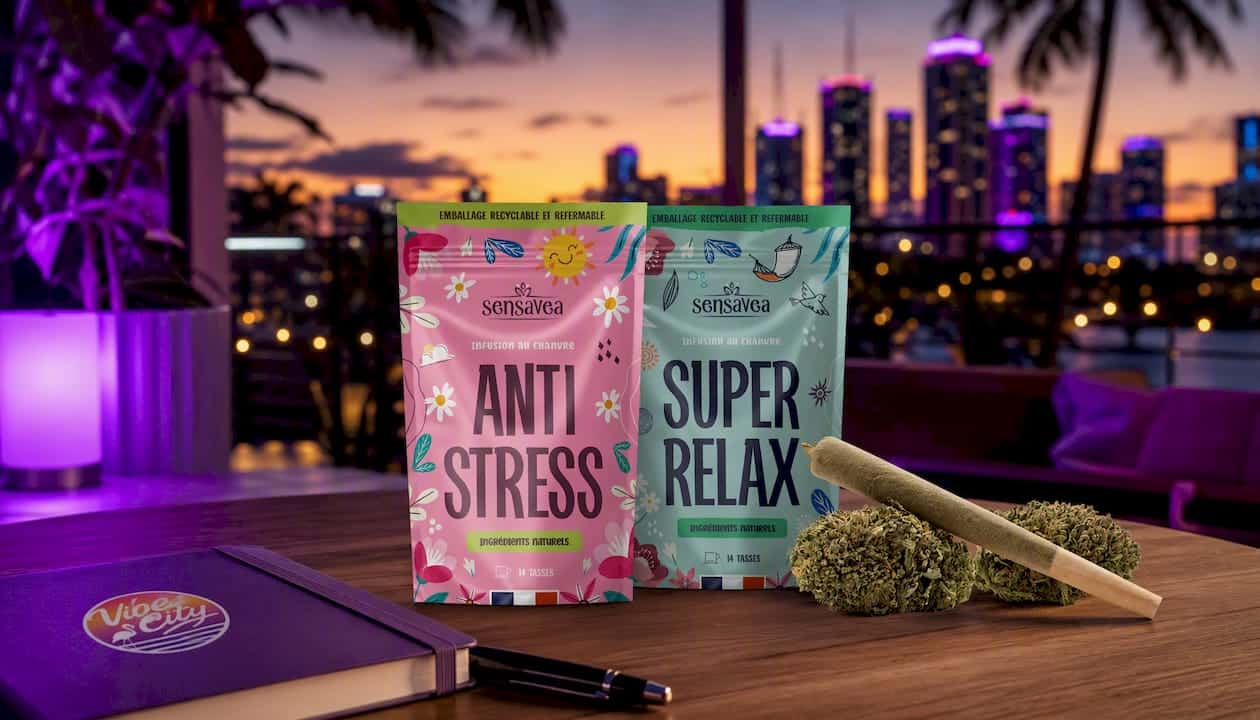
For more occasional use and a quick effect, Amnesia CBD prerolls are designed for consumers already familiar with the flower, keeping in mind the dosage variability inherent to this form. Each product comes with its certificate of analysis and traceability, with free delivery on orders over €49 across the entire catalog. It is recommended to consult the product information sheet for each product to verify the exact CBD content before ordering.
This article provides general information and is not a substitute for professional medical advice. Consult a qualified healthcare professional about your specific situation before taking any action based on this content.
Sources
- Therapeutic Efficacy of Cannabidiol (CBD): a Review of the Evidence From Clinical Trials and Human Laboratory Studies
- CBD (Health Magazine): Stress and anxiety, recommended dosage
- CBD: Miraculous therapeutic properties, really? (Inserm / Canal Détox)
Frequently Asked Questions
Does CBD really reduce stress?
Clinical trials show a measurable reduction in experimental anxiety at acute doses of 300 to 600 mg, but evidence on daily use at low doses remains more limited and is based mainly on reported user feedback.
What is the best CBD for stress?
There is no universally superior form: sublingual oil is suitable for precise dosing, an infusion like those from Sensavea for daily preventative use, and a flower for an occasional need with a faster effect.
Which of the different forms of CBD is the most effective stress reliever?
For a quick effect, vaping and flowers take effect in minutes, while sublingual oil takes effect in 15 to 45 minutes with a more stable and reproducible dosage from one use to the next.
Can CBD be given to a child for stress?
No, without prior medical advice. Safety data in children remains insufficient, and any use in this context must be supervised by a healthcare professional.


