

CBD can be legally transported in Europe if its THC content complies with the limit set by the destination country, but the burden of proof lies with the buyer, not the seller. CBD food products, on the other hand, fall under the novel food and are often prohibited from sale in France. Always keep the invoice and the Certificate of Analysis (COA) for the batch, prioritize intra-European purchases, and you will eliminate most of the risk of seizure.
In short:
- Legal tolerance in Europe depends on compliance with the THC threshold set by each country, and it is up to the buyer to prove compliance.
- CBD food products often remain prohibited in France due to the novel food, unless their authorization is clearly proven.
- During an inspection, a colorimetric test and laboratory analysis are required to confirm compliance, but false positives can complicate the procedure.
- In the event of a seizure, it is crucial to obtain a written receipt, gather supporting documents and appeal quickly to contest the decision.
- When buying within Europe, always ask for a recent invoice and a credible certificate of analysis, and check the regulatory status before importing or consuming CBD.
Table of Contents
- What does the law say about CBD and customs?
- How does a customs inspection of CBD work?
- What are the penalties for non-compliance?
- What should you check before buying or importing CBD?
- What to do if your CBD package is seized?
- What field experience changes in the equation
- How to buy CBD without any unpleasant surprises at customs?
- Where can I check the applicable regulations myself?
- Sources
- Frequently Asked Questions
What does the law say about CBD and customs?
The legal framework for CBD is based on a figure that varies depending on the legislation and the country: the THC content. Case law has also played a significant role in this matter: the Kanavape ruling by the Court of Justice of the European Union established the free movement of CBD extracted from the whole plant, and in 2022, the French Council of State overturned the decree prohibiting the sale of raw hemp flowers and leaves with low THC, citing the principle of proportionality.
Three categories stand out today:
- Non-medical CBD : flowers, resins, cosmetic oils, sold freely provided that the THC threshold is respected.
- CBD food products : ingestible oils, infusions, gummies, subject to the Novel Food Regulation (EU 2015/2283), which often makes them unauthorized for sale in France in the absence of registration in the European register.
- Medicinal products containing CBD, such as Epidyolex, follow a completely separate pharmaceutical circuit and have nothing to do with wellness products purchased in stores.
This distinction explains why a CBD infusion can be blocked while an identical-looking cosmetic oil passes through without any problem.
How does a customs inspection of CBD work?
The procedure almost always follows the same logic, whether it is a postal parcel or luggage at the airport.
- Interception of the package or luggage during routine checks.
- A colorimetric test was performed on site to detect the presence of cannabinoids.
- Sample collection if the test is alarming or if the product appears suspicious.
- Analysis in a laboratory accredited according to the ISO/IEC 17025 standard, the only one authorized to resolve a dispute.
- Final decision : return of the goods or precautionary seizure pending the results.
The key figure to remember: French customs recently recorded several thousand findings related to synthetic drugs and seized several tons of products, a trend that continued with a significant quantity of synthetic cannabinoids intercepted in 2025, according to customs data.
The problem is that rapid border crossing tests are far from foolproof: they can produce a false positive on a perfectly compliant product, and only an expert analysis by an accredited laboratory can challenge a seizure. Between interception and the final result, the goods can remain stuck for several weeks, or even several months—a delay that weighs heavily on both the individual consumer and the professional awaiting their shipment.
What are the penalties for non-compliance?
- Systematic confiscation of goods deemed non-compliant, without any possibility of negotiation on this point.
- Administrative fine ranging from one to three times the value of the seized product, according to applicable legal provisions.
- Reclassification as a narcotic if the product exceeds the THC threshold or contains synthetic cannabinoids: the case then shifts towards penalties of up to three years imprisonment and a €75,000 fine.
- Aggravating circumstances : presence of undeclared synthetic cannabinoids, clearly commercial volume, origin outside the European Union without documentation.
Health authorities have raised the alarm on this last point: a joint alert from the ANSM (French National Agency for Medicines and Health Products Safety) and ANSES (French Agency for Food, Environmental and Occupational Health & Safety), published in 2025, identified several cases of poisoning linked to products sold as CBD but adulterated with synthetic cannabinoids. It is precisely this mixture of legal cannabis and dangerous molecules that justifies customs vigilance, more so than CBD itself.
What should you check before buying or importing CBD?
A short checklist, applied systematically, reduces the risk of seizure much more effectively than a general and diffuse distrust of all sellers.
- Opt for intra-European purchases. A product that already circulates freely between member states avoids the extra-EU import formalities and the increased controls that accompany them.
- Demand an invoice and a COA dated less than six months ago, issued by a laboratory accredited according to the ISO/IEC 17025 standard. This document is your only proof in the face of an agent who doubts the THC level.
- Avoid CBD edibles unless the seller can demonstrate explicit authorization under the Novel Food Regulation. If in doubt, opt for isolates or topical products, which fall outside the scope of this regulation.
- Limit quantities to reasonable personal use. An order that looks like a commercial stock automatically attracts attention, even if the product is perfectly legal.
- Request full traceability : batch number, origin of the crop, production method. Also keep the shipping tracking information; it serves as proof in case of a dispute over the purchase date.
Pro tip: Always photograph the label, the COA, and the package upon receipt. These time-stamped images on your phone are often worth more than a long explanation to a hurried customs officer.
For a professional importer rather than a private individual, the process goes further: requesting a binding tariff information (BTI) from customs secures the classification of the product for three years, a guarantee that few buyers are aware of even though it costs nothing to request.
What to do if your CBD package is seized?
The first reaction is crucial: demand a written receipt specifying the exact reason for the seizure, the date, and the customs service involved. Without this document, any subsequent challenge will be at a significant disadvantage.
Next, gather your evidence: the purchase invoice, the Certificate of Analysis (COA) for the batch in question, and any written correspondence with the seller that establishes the origin and composition of the product. This complete record, more than any verbal argument, constitutes the best defense for an individual facing seizure.
- An administrative appeal, addressed to the relevant interregional customs directorate within the prescribed time limits and accompanied by supporting documents, is the fastest route for low-value goods.
- Legal actionis taken before the customs chamber when the financial stakes justify a longer procedure. Beyond a certain amount, consulting a lawyer specializing in customs law becomes advisable, especially if the case involves potential criminal charges.
Requesting analysis immediately from an accredited laboratory, as soon as the rapid test is positive, almost always speeds up this recourse: it is often this document that tips the decision in favor of the consumer.
What field experience changes in the equation
Legal theory alone is not always enough to protect a buyer who doesn't know what they're actually holding. Each batch is documented with a certificate of analysis and traceability specifying the cultivation method—indoor, greenhouse, or outdoor—information that many sellers merely promise without ever providing it in writing.
This meticulous approach isn't just a marketing ploy. A clear invoice and a recent Certificate of Authenticity (COA) are precisely the documents a customs officer requests during an inspection, and their absence transforms a legitimate product into a complicated case. Shipments sent throughout Europe include this documentation from the moment of order, saving the buyer the hassle of chasing after supporting documents when they need them most.
— Julien
How to buy CBD without any unpleasant surprises at customs?
Faced with warnings about synthetic cannabinoids adulterating certain products sold as CBD, the choice of supplier is just as important as knowledge of legal limits. Supplier selection is structured around this requirement for traceability, rather than simply accumulating references without guarantees.

Each order comes with a detailed invoice and a batch number that links the received product to its certificate of analysis. Amnesia CBD prerolls exemplify this ready-to-use format, requiring no additional handling that could raise concerns during inspection. Yellow Cream CBD resin follows the same batch tracking system, a point that experienced buyers systematically verify before ordering resin, the origin of which can sometimes be unclear with other sellers.
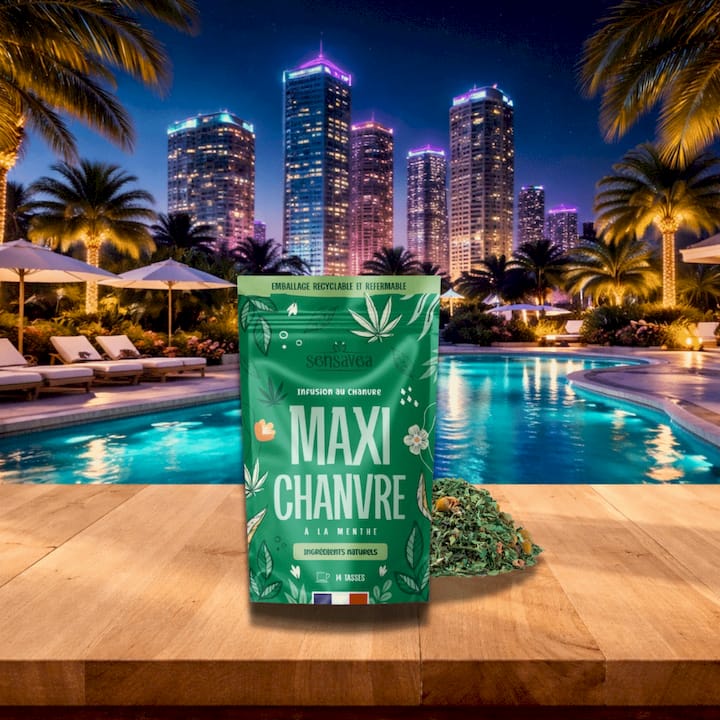
For food products, vigilance is still essential: an infusion like Sensavea's Maxi Hemp CBD herbal tea falls under the Novel Food Regulation and warrants verification of its status before any purchase intended for cross-border use. Consult the product sheets on Vibecity to see the documents provided with each item before confirming your order.
Where can I check the applicable regulations myself?
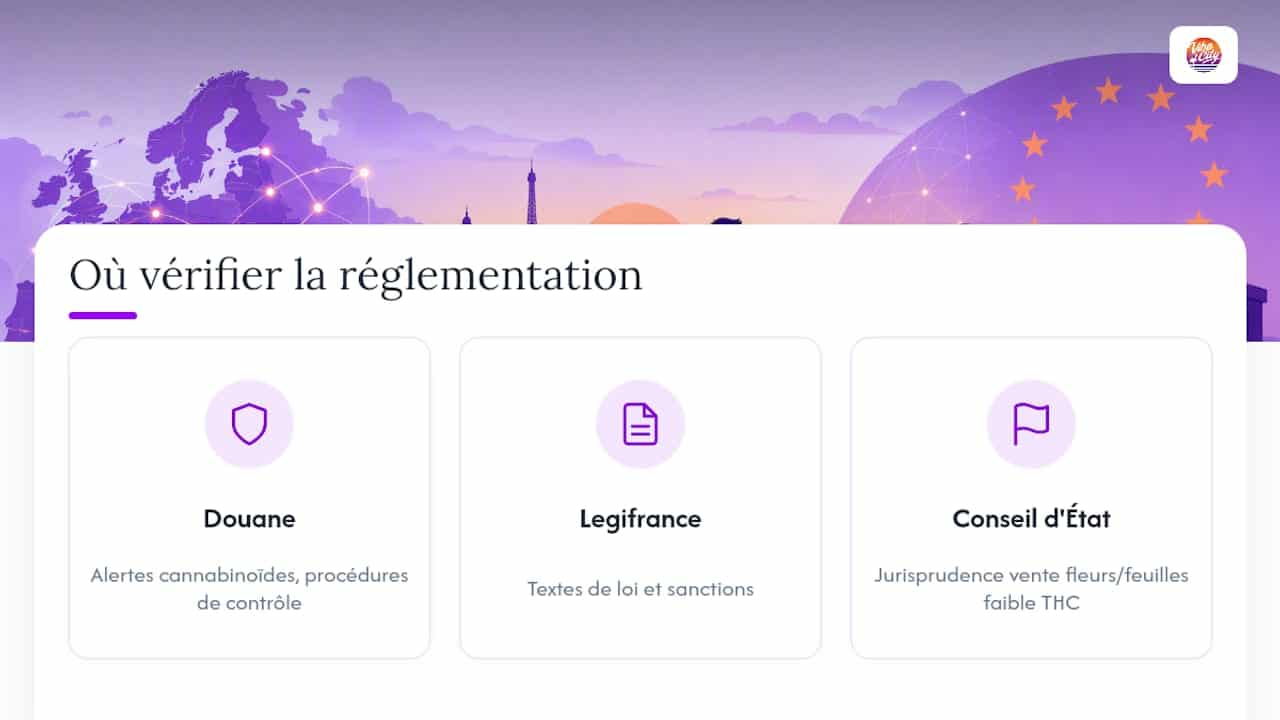
Three official sources are sufficient to gather most of the essential information needed before purchasing or traveling with CBD. The French customs website publishes alerts on synthetic cannabinoids and details the current control procedures. Legifrance provides access to the legal texts and applicable penalties for drug-related offenses. Decisions from the Council of State complete this overview by clarifying the most recent case law on the sale of low-THC hemp flowers and leaves.
Sources
- Customs — CBD: when the label hides dangerous substances
- Legifrance — penalties for drug-related offenses
- Ministry of Agriculture — Novel Food and CBD
- Council of State — annulment of the decree on the sale of cannabis flowers and leaves
Frequently Asked Questions
Is it possible to travel by plane with CBD in Europe?
Yes, as long as the product complies with the THC threshold of the country of departure and arrival and you can present an invoice and a COA in case of inspection.
What document proves the conformity of a CBD product?
The certificate of analysis (COA) issued by an ISO/IEC 17025 accredited laboratory, accompanied by the purchase invoice and the lot number.
Is CBD food legal in France?
Most CBD food products, such as infusions or gummies, fall under the Novel Food Regulation and often remain unauthorized for sale without registration in the European register.
What are the risks if CBD is seized at customs?
The confiscation of the goods and an administrative fine that can reach one to three times their value, or even criminal prosecution if the product is reclassified as a narcotic.
How to contest a CBD seizure?
By demanding a written receipt, gathering the invoice and COA, then initiating an administrative appeal with the interregional customs directorate or a legal appeal if the financial stakes justify it.


