

Opt for a traceable, indoor-grown CBD flower, cultivated in a controlled environment and accompanied by a certificate of analysis: this guarantees consistent aroma and a rich terpene profile. Products like Cosmic Cookies BZ10, Purple BZ10, or Gelato DC10 illustrate what well-managed indoor cultivation can offer.
In short:
- Indoor cultivation allows for denser CBD flowers, rich in trichomes and with a reinforced terpene profile, provided they are traceable and accompanied by a certificate of analysis.
- A quality flower can be recognized by its bright colors, its numerous and clearly visible trichomes, its slightly sticky texture, and its clear smell without traces of moisture.
- It is always necessary to check for the presence of a certificate of analysis, the THC level below 0.3%, the traceability of the batch and a price consistent with the market, to avoid poor quality products.
- Vaporizing between 160°C and 190°C or infusing at low temperature with a fat are preferable to combustion, which degrades terpenes and cannabinoids more effectively.
- Optimal preservation relies on storage in an airtight jar, away from light and at a stable temperature, with a curing period of several weeks to several months to preserve all the qualities.
Table of Contents
- What is indoor cultivation and what is its effect on CBD flower?
- How to recognize a good indoor CBD flower by sight and smell?
- What criteria should you check before buying an indoor CBD flower?
- Vaporization, infusion or combustion: which method of consumption should be preferred?
- How to store an indoor CBD flower after purchase?
- How long does indoor growing take until harvest?
- How to manage pests and diseases specific to indoor growing?
- What is the environmental impact of indoor farming?
- Why Vibecity is focusing on premium indoor spaces
- Why indoor spaces remain underestimated by busy shoppers
- Sources
- Frequently Asked Questions
What is indoor cultivation and what is its effect on CBD flower?
Indoor cultivation involves artificially reproducing, in an enclosed space, all the conditions the hemp plant needs to thrive. Nothing is left to chance: the grower controls the light, temperature, humidity, CO2 levels, and nutrient supply at every stage of the cycle. This complete control of the parameters directly impacts what you find in the jar, producing denser flowers with more trichomes and a more pronounced terpene profile.
Three main cultivation methods coexist in the CBD market:
- Indoors : complete control of the environment, consistency of results from one harvest to the next, but higher energy costs and selling price.
- In a greenhouse : natural light supplemented by additional lighting, a compromise between quality and production cost.
- Outdoor : cultivation in open fields, dependent on the weather, with flowers often less dense but a more affordable purchase price.
Each method has its own logic. Outdoor cultivation is appealing due to its price and reduced energy footprint, greenhouse cultivation seeks balance, and indoor cultivation aims for consistency and aromatic intensity. For a consumer who wants the same taste and sensation with every order, indoor cultivation remains the most predictable option.
How to recognize a good indoor CBD flower by sight and smell?
Even before vaporizing or infusing, several clues can be seen with the naked eye. Here's how to distinguish a well-cultivated flower from a disappointing one:
- Colour : a quality indoor flower displays bright colours, sometimes purplish or orange depending on the variety, never dull or greyish.
- Trichomes : these small crystals that cover the flower should be numerous and clearly visible, giving an almost frosted appearance.
- The texture : slightly sticky to the touch, neither dry and crumbly, nor wet and compact.
- The smell : frank, fruity, resinous or spicy notes depending on the terpene profile, without any trace of moisture.
A flower that gives off a smell of cut hay, has brown areas or crumbles into dust at the slightest touch has probably suffered from improper drying or excessively long storage.
Pro tip: Use a small magnifying glass—even a jeweler's loupe will do—to observe the density of the trichomes before buying in a physical store. It's the simplest way to judge the true maturity of a flower in just a few seconds.

What criteria should you check before buying an indoor CBD flower?
A quality indoor CBD flower can be identified by its appearance, not just its aroma. Here are the points to always check before placing an order:
- The Certificate of Analysis (COA) : a reputable seller always provides an independent laboratory document detailing the CBD level, the THC level and the absence of contaminants.
- The THC level : it must remain below 0.3%, a threshold set by the case law of the Council of State in December 2022.
- Batch traceability : origin of the culture, drying method, curing time.
- The desired usage profile : evening relaxation, pronounced aromatic notes, or simply an affordable price-quality ratio.
Price ranges also provide a useful benchmark. Market analyses generally place premium indoor-grown cannabis at around €8 to €15 per gram, compared to €5 to €10 for greenhouse-grown and €3 to €6 for outdoor-grown. An abnormally low price for a flower presented as indoor-grown should raise a red flag, as should the absence of a Certificate of Authenticity (COA) or a seller unable to specify the batch's origin.
Vaporization, infusion or combustion: which method of consumption should be preferred?
Combustion remains the most common method, but it exposes users to substances from the smoke that vaporization or infusion avoid. These two alternatives also better preserve terpenes and cannabinoids, which degrade at high temperatures.
- Vaporization : aim for a range of 160°C to 190°C to release CBD without burning the plant material.
- Infusion : opt for a slow decoction at low temperature, combined with a fatty substance to better diffuse the cannabinoids.
- Combustion : to be avoided in regular use, due to the lack of an available alternative.
The choice of consumption method remains an individual responsibility.
How to store an indoor CBD flower after purchase?
A certificate of analysis at the time of purchase is not enough if subsequent storage degrades the flower. Three simple steps will help preserve its aroma and potency over time:
- Store in an airtight jar, away from air to limit the oxidation of terpenes.
- Store in the dark and at a stable temperature, ideally above 15°C, as temperature fluctuations accelerate the loss of aromas.
- Check the curing : a properly cured flower gives off a clear odor and a supple texture, never brittle or wet.
The curing process itself can last several weeks, sometimes longer for the highest quality products. This step, often overlooked by consumers, largely determines the final quality perceived on the palate and nose.
How long does indoor growing take until harvest?
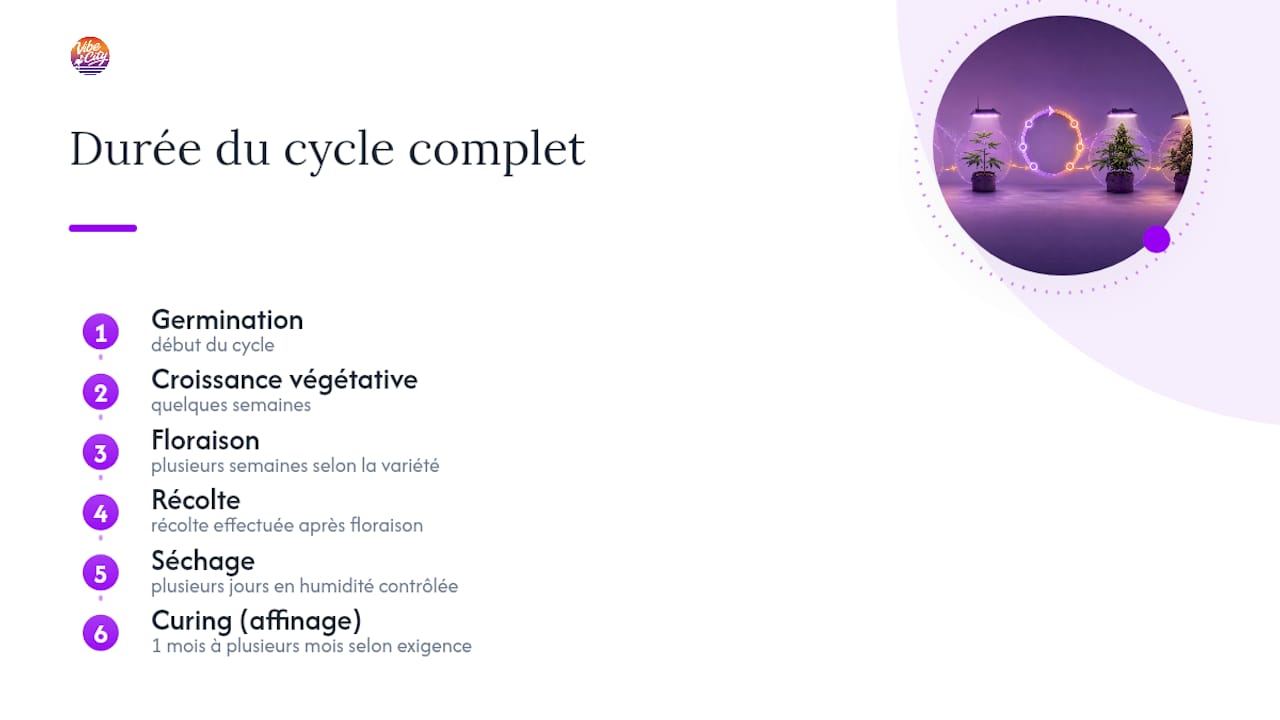
The complete cycle of an indoor CBD flower follows a fairly precise sequence, from germination to harvest, then from drying to final curing. The vegetative growth phase generally lasts a few weeks, followed by flowering, which also extends over several weeks depending on the variety cultivated. Once harvested, drying takes several days in a humidity-controlled room before curing begins.
This final stage, often underestimated, can last from one month to several months depending on the producer's requirements. Curing too quickly results in a flower that still smells of fresh grass or hay, while patient curing reveals more complex aromas and stabilizes the cannabinoid levels.
It is precisely this timeframe that explains the price difference between a mass-produced indoor flower and a truly premium one. The time invested in drying and curing isn't reflected on the label, but it's immediately noticeable upon opening the jar. A producer who rushes the process to accelerate stock turnover almost always sacrifices some of the final terpene profile, which explains why two indoor flowers of the same cultivar can offer very different olfactory experiences.
How to manage pests and diseases specific to indoor growing?
The enclosed environment of indoor cultivation protects the plant from harsh weather and external pests, but it also creates conditions favorable to other threats. Stable humidity and constant warmth can encourage the growth of gray mold, especially on the densest flowers, as well as the development of mites or aphids, which proliferate rapidly in a confined space.
Prevention relies primarily on ventilation. Constant air exchange limits the accumulation of humidity around the flowers and significantly reduces the risk of mold, a particularly dreaded problem with varieties that have very compact buds. Regularly monitoring the relative humidity level, generally kept below specific thresholds during flowering, is a basic practice for any serious grower.
Professional growers also rely on biological prevention rather than chemical treatments, notably through the introduction of natural beneficial insects such as certain predatory mites that regulate pest populations without leaving residues on the final flower. This approach directly impacts the quality perceived by the consumer, since a flower chemically treated at the end of its growth cycle may still contain undesirable traces, a point that the certificate of analysis allows for verification.
What is the environmental impact of indoor farming?
Indoor cultivation has a real energy cost, borne by the producers who practice it. Artificial lighting, air conditioning, and dehumidification operate continuously for several months, which largely explains the price difference compared to flowers grown outdoors or in greenhouses.
Growers most concerned about their environmental footprint are investing in more energy-efficient LED lighting than older discharge lamps, as well as heat recovery systems that limit overall energy consumption. Some are also combining indoor growing with optimized light cycles to reduce the number of hours of light required without compromising yield.
This energy reality explains why the price premium for indoor growing reflects actual production costs, and not just a marketing ploy. A consumer mindful of their environmental impact can choose according to their priorities: favoring outdoor or greenhouse growing for a smaller footprint, or opting for a premium indoor option, accepting this energy trade-off in exchange for superior flavor consistency.
Why Vibecity is focusing on premium indoor spaces
Vibecity structures its catalogue around traceability and compliance, offering distinct cultivation methods, indoor, greenhouse and outdoor, sothat each consumer can choose according to their own balance between budget and aromatic requirements.
Why indoor spaces remain underestimated by busy shoppers
Most guides compare growing methods based on a single criterion—price per gram—forgetting that consistency from batch to batch is just as important to the consumer's actual experience. It's this predictability, more than the price tag, that often justifies choosing indoor growing for regular use.
The other blind spot concerns curing. Price alone never tells the whole story: an available COA and clear batch traceability remain, in my opinion, better indicators of quality than a "premium" label without supporting evidence.
— Julien
Sources
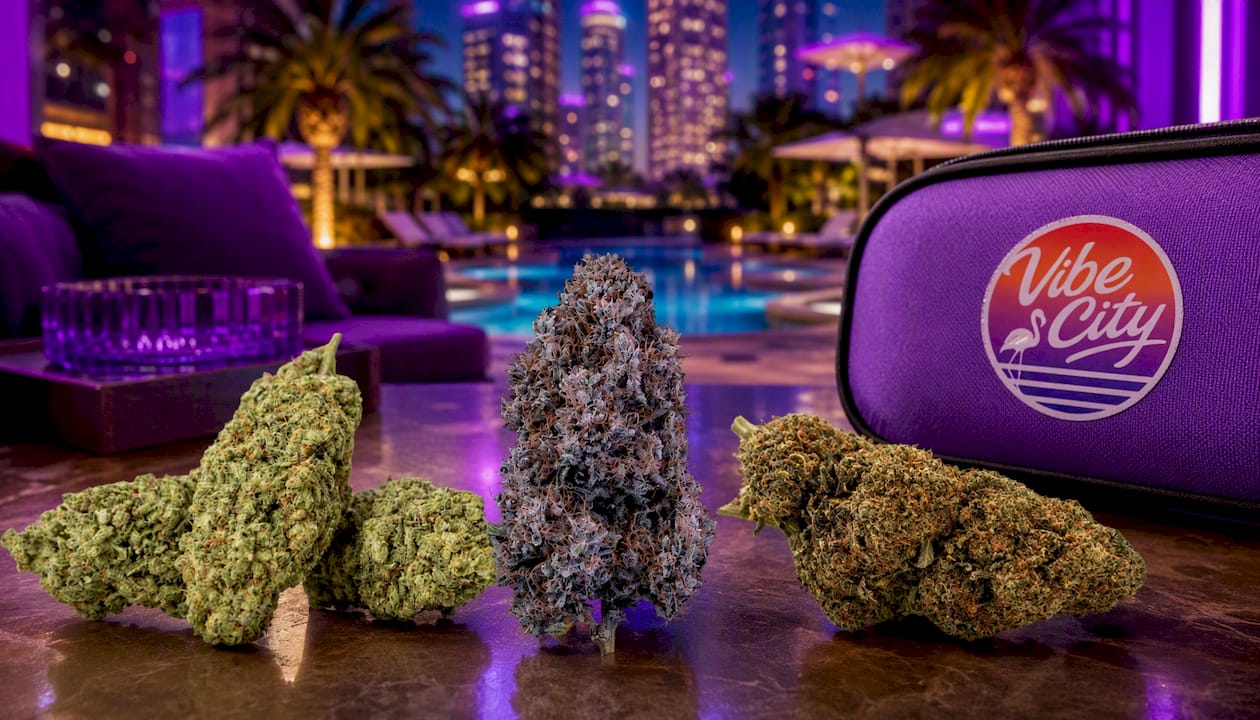
Three catalog references perfectly illustrate what indoor growing can offer, each with its own distinct aromatic profile. Cosmic Cookies BZ10 flowers boast a sweet and slightly spicy terpene profile, ideal for those seeking a indulgent experience at the end of the day.
The Purple BZ10 flowers boast deeper, fruitier notes, with a purplish hue characteristic of well-exposed indoor varieties, often sought after for relaxing evening use. The Gelato DC10 flowers complement this selection with a sweet and creamy profile, appreciated by those who enjoy pronounced aromatic sensations.
Each product page typically specifies the availability of the certificate of analysis corresponding to the batch sold, a point we recommend always checking before placing an order. Delivery is free for orders over €49, and the entire catalog of flowers and small buds remains available online to compare profiles according to your preferences.
- Legifrance — texts and case law (reference to the Council of State decision)
- CBD flowers
- Naturally CBD — What is a CBD flower and how is it grown?
Frequently Asked Questions
Why shouldn't you smoke CBD flowers?
Combustion exposes users to substances from the smoke, which vaporization and infusion avoid, while also better preserving terpenes and cannabinoids. These two alternatives remain the most recommended methods of consuming CBD flower.
What is the best variety of CBD flower to smoke?
There is no universally best variety: the choice depends on the desired terpene profile, sweet and indulgent with Gelato DC10 flowers, fruitier and deeper with Purple BZ10 flowers, or spicy with Cosmic Cookies BZ10 flowers. The quality of the indoor cultivation and the certificate of analysis often matter more than the name of the variety.
Which CBD flowers are the most potent?
The perceived potency depends primarily on the CBD level indicated on the certificate of analysis and the density of trichomes visible on the flower. A well-managed indoor grow generally produces denser flowers with a higher trichome content than outdoor grows.
Is it possible to legally smoke CBD flowers in France?
Yes, provided that the THC level remains below 0.3%, a threshold set by the case law of the Council of State in December 2022.This threshold applies to all CBD flowers marketed in France, regardless of their cultivation method.


