

Outdoor CBD flowers are hemp inflorescences grown outdoors, under a natural solar cycle, without artificial light or climate. Their main appeal lies in a more complex aromatic profile, marked by sesquiterpenes that are further enhanced by the nighttime cold and direct sunlight. This added "terroir" comes at a price: without a verifiable Certificate of Analysis (COA) and soil traceability, it's impossible to guarantee a THC level that meets the legal threshold 0,3 %.
In short:
- High-quality outdoor cannabis is primarily recognized by a high level of sesquiterpenes, verifiable only via a precise certificate of analysis.
- A good COA should indicate the total CBD, THC below 0.3%, the absence of heavy metals and pesticides, with a clear limit of quantification.
- Outdoor varieties are classified into Haze, Kush or fruity profiles, selected according to their robustness, flowering time and suitable format.
- Quality also depends heavily on the terroir, the soil and the climatic conditions, with aromatic expression influenced by temperature variations.
- Traceability and regulatory compliance, particularly through a reliable COA, are essential to avoid risks related to contaminants or synthetic cannabinoids.
Table of Contents
- How to recognize a quality outdoor CBD flower
- Which outdoor varieties should you choose according to your tastes?
- Which cultivation steps determine the final quality?
- How to verify the conformity and safety of an outdoor batch?
- Our VibeCity selection and why we recommend it
- How to store your outdoor CBD flowers after receiving them?
- The author's perspective on the value of the outdoors
- Buy with confidence: VibeCity product pages
- Sources
- Frequently Asked Questions
How to recognize a quality outdoor CBD flower
A well-cultivated outdoor flower is first distinguished by its aroma. Outdoor crops generally produce more sesquiterpenes, particularly β-caryophyllene (peppery, spicy notes) and α-humulene (woody, hoppy notes), two compounds confirmed by a comparative study of indoor and outdoor terpene profiles. It is this signature that gives outdoor flowers their "raw" character, less polished than calibrated indoor productions.
The temperature difference between day and night, what agronomists call ∆T, plays a central role in this aromatic expression. The greater the temperature amplitude, the more terpene compounds the plant synthesizes to protect itself from climatic stress. Two batches from the same genetic line but harvested from different plots can therefore exhibit significantly different aromas, a phenomenon that multi-site trials on the Futura 75 variety have measured through significant variations in yield and essential oil composition depending on the growing environment.
Conversely, a poorly controlled indoor culture can suffer from premature oxidation or degraded cannabinoids due to excessive light exposure, which flattens the flavor profile without necessarily making it dangerous.
Key takeaway: an authentic outdoor batch almost always displays a higher sesquiterpene level than an indoor equivalent, but only a COA allows you to verify this with supporting figures.
To read a COA without getting lost, focus on four lines:
- Total CBD : the actual concentration of cannabidiol, often expressed as a percentage of dry weight.
- Total THC : must remain below the regulatory threshold of 0.3%, including delta9-THC.
- Heavy metals : lead, cadmium, mercury, arsenic, contaminants that hemp tends to absorb from the soil.
- Pesticide residues : their absence must be confirmed, not just mentioned on the label.
A proper Certificate of Analysis (COA) also specifies the laboratory's limit of quantification, that is, the threshold below which a substance is no longer detectable. Without this information, a "not detected" result is largely meaningless.
Which outdoor varieties should you choose according to your tastes?
The outdoor hemp market revolves around three main terpene families, inherited genetically but truly revealed by outdoor cultivation. Haze phenotypes develop citrus and spicy notes, often perceived as more "invigorating" in aroma. Kush profiles lean towards earthy and resinous aromas, with a rounder mouthfeel. Fruity varieties, on the other hand, rely on lighter terpenes like limonene or myrcene, which impart sweet or tangy notes.
The choice isn't limited to aroma. Here are the criteria that really matter when buying:
- Robustness of the genetics : some varieties tolerate better the humidity and temperature variations typical of outdoor growing.
- Flowering time : a longer flowering period exposes the plant more to harsh weather, which influences the harvest schedule.
- Yield per hectare : a criterion that is particularly relevant for understanding price formation, not for judging the individual quality of a batch.
- Available formats : small buds or classic buds, a distinction that depends as much on budget as on the intended use.
Before buying, it is legitimate to ask the seller for three things: the COA of the precise batch (not a generic COA of the variety), the geographical origin of the cultivation, and if possible a macro photo of the inflorescences to check the density of the trichomes.
Pro tip: If you're trying an outdoor strain for the first time, opt for a smaller format with small buds rather than a larger one with regular buds. This way, you can test the flavor profile at a lower cost before investing in a denser, more economical format.
Which cultivation steps determine the final quality?
The quality of an outdoor flower is determined well before harvest, starting with the choice of soil and exposure.
- Exposure and living soil : the plant needs a minimum of six to eight hours of direct sunlight per day, on living soil rich in organic matter, with sufficient drainage to avoid root asphyxiation.
- Amendment and pH : compost and a stabilized pH around 6 to 7 condition the assimilation of nutrients, therefore the vigor of the plant and its ability to produce terpenes.
- Planting and flowering calendar : the outdoor cycle follows the natural shortening of days at the end of summer, with flowering generally extending over several weeks depending on the genetics.
- Maturity indicators : the trichomes change from clear to milky, a sign of optimal maturity, then turn amber when degradation begins. The pistils, meanwhile, turn brown and shrivel.
- Botrytis risk management : late rains favor this grey mold which can destroy an entire harvest in a few days, hence the importance of close weather monitoring at the end of the cycle.
- Drying and curing : slow drying, away from light, followed by curing in a jar, preserves the terpenes that the plant has taken months to develop.
Agronomic studies on hemp essential oils in different environments confirm that the final terpene composition depends as much on the variety as on the terroir. Two neighboring plots can produce significantly different results depending on their exposure, which explains why asking about the precise origin of a batch is never a superfluous question.
How to verify the conformity and safety of an outdoor batch?
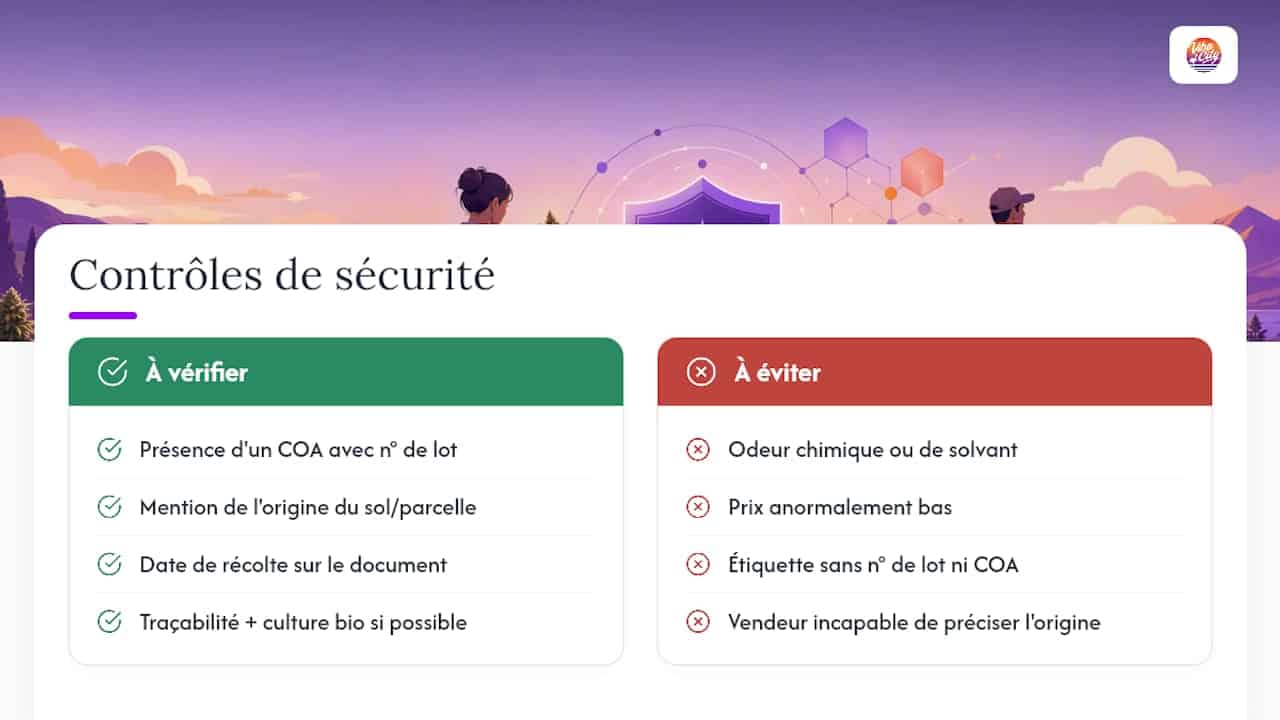
Three documents should accompany any reputable batch: the batch certificate of authenticity (COA) with its number, a statement of the soil or plot origin, and the harvest date. Without these elements, it is impossible to verify what you are actually buying.
French regulations set the legal limit at 0.3% THC in the finished product. This figure is reassuring, but it doesn't tell the whole story: a Certificate of Analysis (COA) can show a compliant result while not necessarily detecting all potentially present synthetic cannabinoids, or rare terpenes not listed among the analytes tested. The laboratory's transparency regarding what it actually tests is just as important as the document itself.
Since 2024, an increase in poisonings related to CBD products has been observed, often caused by the presence of synthetic cannabinoids or THC levels exceeding 0.3%.
Certain signals should raise immediate alarm: a chemical or solvent odor, an abnormally low price compared to the market, a label without a batch number or COA, or a seller unable to specify the origin of the crop.
Hemp also tends to absorb contaminants present in its growing soil, including heavy metals. This is why soil traceability and, ideally, organic farming practices provide additional guarantees, beyond simply complying with the THC limit.
ANSES reminds us in its 2025 press release that untraceable products may contain prohibited substances, with real risks: excessive drowsiness, interactions with certain drug treatments, and special vigilance recommended for children and pregnant women.
Our VibeCity selection and why we recommend it
At Vibecity, the selection of outdoor flowers adheres to a simple set of criteria: distinctive aromatic profile, complete batch traceability, available Certificate of Authenticity (COA), and systematic testing for pesticides and heavy metals. Any flower that doesn't meet these criteria is not included in the catalog, regardless of its other popularity.
Three references illustrate this approach:
- Flowers Purple BZ10 : fruity and slightly tangy notes, brought about by outdoor cultivation which accentuates the purple nuances of the plant.
These flowers are available in several sizes, including small buds, with shipping from Metz and free delivery on orders over a certain amount. Each product comes with its compliance information, which should be reviewed before purchase.
How to store your outdoor CBD flowers after receiving them?
A high-quality outdoor flower can lose much of its aromatic appeal if it is stored improperly after purchase. The basic rule remains: an airtight glass jar at a stable room temperature of around 20°C, away from direct sunlight and excessive humidity.
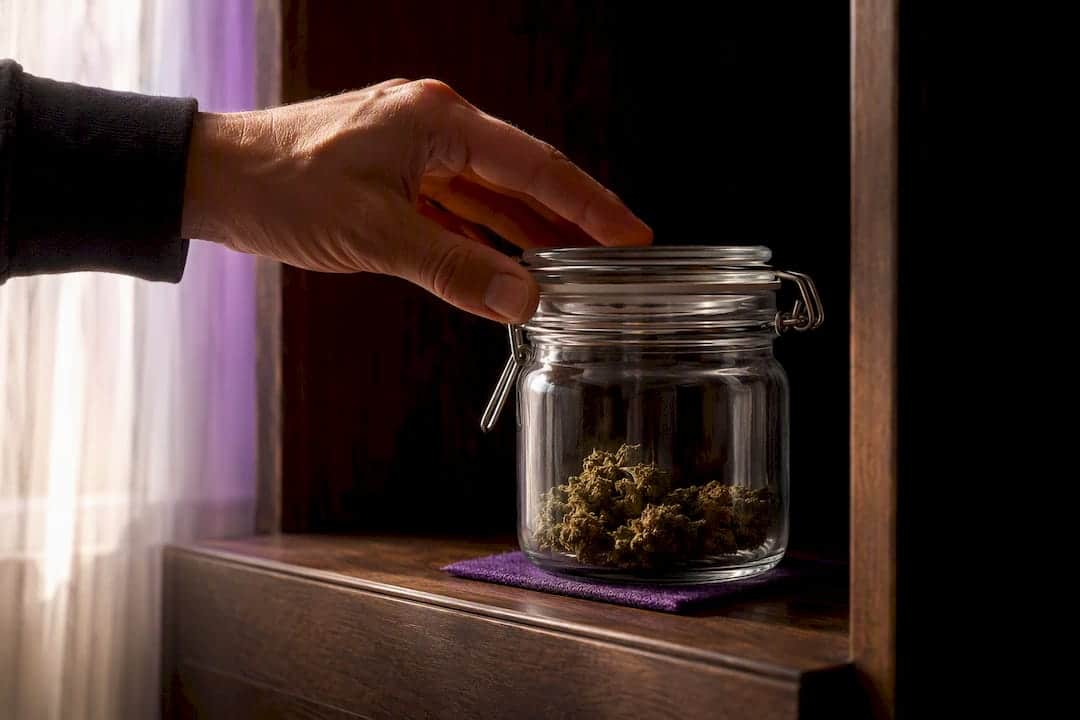
For optimal curing, it's best to open the jar for a few minutes each day for about ten days, then gradually reduce the intervals between openings. This method allows residual moisture to escape without abruptly drying out the flowers, thus preserving both the volatile terpenes and the texture of the inflorescences.
Avoid the refrigerator: the cold, damp air encourages condensation and therefore mold, the number one enemy of an outdoor flower already exposed to the elements during its growth. Also avoid using airtight plastic bags for extended periods, as they trap moisture and prevent the flower from breathing. Glass remains the best option, far superior to plastic or overly porous paper.
Finally, keep the batch away from heat sources (radiator, direct sunlight through a window), which accelerate the degradation of cannabinoids and quickly tarnish the aromatic profile that outdoor cultivation had taken months to build up.
The author's perspective on the value of the outdoors
Outdoor growing doesn't excel in every aspect, and that's precisely what makes it so appealing. Its aromatic complexity, driven by the sesquiterpenes revealed by natural temperature variations, offers a flavor experience that even the most expertly controlled indoor growing struggles to replicate. I wholeheartedly recommend it to anyone seeking this authentic terroir rather than maximum cannabinoid concentration, a need where indoor growing still holds an advantage. But this naturalness comes at a price: without a verifiable Certificate of Authenticity (COA) and soil traceability, outdoor growing loses all its appeal and becomes a risky gamble.
— Julien
Buy with confidence: VibeCity product pages
Vibecity focuses on a small but verified selection rather than an endless catalogue: each featured outdoor flower is accompanied by its COA, which saves the reader from having to do the verification work described earlier in this article.
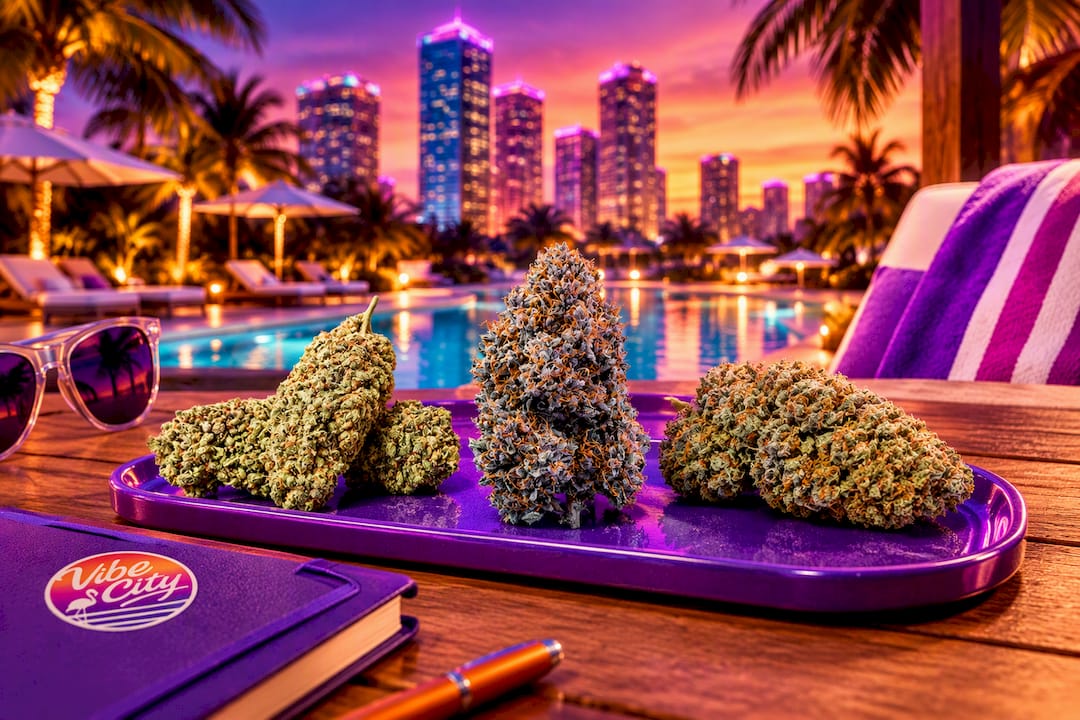
The three varieties presented— Cosmic Cookies BZ10 Flowers, Purple BZ10 Flowers , and Gelato DC10 Flowers—are available in several sizes, including small buds so you can sample an aroma profile without investing in a large package. Delivery is free for orders over €49, with fast shipping from Metz to all of France and Europe. To compare other selection criteria before making your decision, this guide on choosing CBD products is a useful complement to the information provided here.
Before confirming your order, please take two minutes to review the Certificate of Analysis (COA) for your chosen product on its product page. You can also browse our entire CBD flower and resin catalog to compare available formats and profiles.
Sources
- Comparative study of cannabinoids and terpenes in indoor vs outdoor-grown cannabis — PMC
- Inflorescence yield, essential oil composition and antioxidant activity of Cannabis sativa L. cv 'Futura 75' — MDPI Agriculture (PDF)
This article provides general information and is not a substitute for professional medical advice. Consult a qualified healthcare professional about your specific situation before taking any action based on this content.
Frequently Asked Questions
What are the best CBD flowers?
There is no single "best" flower, but a quality batch is recognizable by a verifiable Certificate of Authenticity (COA), clear traceability of origin, and a rich aromatic profile, often more pronounced in sesquiterpenes in outdoor-grown strains. At Vibecity, products like Cosmic Cookies BZ10 and Gelato DC10 illustrate this approach of selection rather than volume.
Is it legal to grow CBD in France?
The cultivation of hemp for CBD is regulated: only certain authorized varieties can be grown, and the THC content of the finished product must remain below the 0.3% threshold. This framework explains why traceability and laboratory analysis remain essential, as ANSES (the French Agency for Food, Environmental and Occupational Health & Safety) emphasizes in its alerts regarding non-compliant products.
What is the best CBD flower in the world?
No flower can verifiably claim this title, as quality depends on the terroir, genetics, and cultivation practices specific to each batch. Comparative analyses primarily show that outdoor crops develop distinct terpene profiles compared to indoor crops, making the comparison more qualitative than quantitative.
How can you tell if an outdoor CBD flower is properly traceable?
Always request the Certificate of Authenticity (COA) for the specific batch, including its number, as well as the geographical origin of the crop and the harvest date. The absence of any of these three elements should raise concerns, especially given the risk of food poisoning reported by ANSES (French Agency for Food, Environmental and Occupational Health & Safety) regarding non-compliant products.
What is the difference between small buds and classic buds grown outdoors?
Small buds are smaller inflorescences, often from the same plants as regular buds, sold at a more affordable price with no difference in quality or safety. The choice depends mainly on the intended use: discovering a new flavor profile or an economical format for regular consumption.


