

CBD is not classified as a narcotic in Europe, as confirmed by the Court of Justice of the European Union in the Kanavape ruling. However, most food products and supplements containing CBD remain blocked by the Novel Food Regulation due to insufficient evidence of their long-term safety. In practical terms, a reader can legally purchase certain forms of CBD, but should remain cautious regarding food products and the recently announced stricter controls.
In short:
- The marketing of CBD foods remains blocked due to the requirement for a safety assessment, as their long-term safety has not yet been fully demonstrated.
- Since 2023, the permitted THC threshold in industrial hemp has been raised to 0.3%, making it easier to choose cultivable varieties, but European regulations still impose strict controls.
- The European Court's Kanavape ruling affirms that CBD extracted from the whole plant is not a narcotic, obliging states to justify any restrictions in a proportionate and scientific manner.
- National rules still differ widely, particularly in France, where controls will intensify in 2026, especially regarding the labeling and compliance of CBD products.
- Choosing a seller who is transparent about traceability and THC levels, like VibeCity, remains the best strategy to avoid risks during purchases or checks.
Table of Contents
- European framework: applicable texts, THC thresholds and the role of institutions
- Novel Food and Safety: Why CBD Foods Remain Blocked
- Key case law: what the Kanavape ruling changes
- Country-by-country overview: rules that still differ significantly
- What the law says according to the product's form
- Compliance checklist for sellers and consumers
- How VibeCity addresses compliance and traceability
- Something to watch in 2026 and 2027 on the regulatory front
- Find certified CBD products at VibeCity
- Sources
- Frequently Asked Questions
European framework: applicable texts, THC thresholds and the role of institutions
CBD regulation in Europe is based on a patchwork of texts that do not all address the same issue: agricultural cultivation on the one hand, food safety on the other. Since January 1, 2023, the permitted THC level for industrial hemp has been harmonized at 0.3% for varieties listed in the European catalogue, compared to 0.2% previously. This increase has automatically expanded the number of varieties that can be legally cultivated in the Union, while leaving each member state free to implement stricter national controls on marketing.
The European Food Safety Authority (EFSA) plays a central role in this system: it evaluates the applications submitted by manufacturers to have CBD recognized as a safe food ingredient, and it is the absence of a favorable conclusion in its opinions that effectively blocks authorizations.
Three categories of actions structure this framework:
- European regulations, which are directly applicable, set the thresholds and categories of products covered.
- The communications and decisions of the European Commission, which interpret these regulations and decide on Novel Food cases.
- National decisions and controls, which adapt the application of European law to local realities, sometimes in a restrictive way.
0,3 % : this is the THC level now harmonized for hemp varieties eligible for cultivation in the European Union, an increase that structures the entire chain, from seed to finished product.
Novel Food and Safety: Why CBD Foods Remain Blocked
The term "novel food" in European law refers to any food or ingredient that has no significant history of consumption before May 1997. CBD falls into this category because it did not exist, in extracted and concentrated form, in the European food supply before this pivotal date. However, a novel food can only be marketed after authorization granted following a safety assessment, which explains the ongoing restrictions on CBD oils, capsules, and beverages sold as food products.

In 2026, the European Commission terminated several evaluation procedures initiated for CBD applications, considering that long-term safety had not been sufficiently demonstrated. These decisions close the door, at least temporarily, to general authorization for food use, while national controls are being strengthened in parallel.
However, a specific numerical benchmark has emerged: in February 2026, theEFSA set a provisional safe intake level for CBD of 0.0275 mg per kilogram of body weight per day, or approximately 2 mg daily for a 70 kg adult. This threshold is only valid under strict conditions:
- CBD purity greater than or equal to 98%.
- The absence of nanoparticles in the evaluated formulation.
- The exclusion of any proven genotoxic risk for the product in question.
This provisional level does not constitute marketing authorization: it gives evaluators a scientific benchmark, not a commercial green light.
Key case law: what the Kanavape ruling changes
The Kanavape ruling, delivered by the Court of Justice of the European Union under reference C-663/18, remains the key decision for understanding the scope of action available to Member States. Analysisof this case law reiterates that the Court ruled that CBD does not constitute a narcotic within the meaning of international conventions, provided that it is extracted from the whole hemp plant and not isolated in such a way as to artificially concentrate its psychoactive effects.
Two principles stem directly from this decision:
- The free movement of goods applies to CBD legally produced in a Member State, unless there is a solid justification from the State wishing to restrict it.
- Any national restriction must be proportionate to a genuinely demonstrated public health objective, and not based on a mere presumption of risk.
For member states wishing to restrict the sale of CBD, the practical consequence is clear: they must provide concrete scientific evidence of the alleged risk, otherwise their restriction risks being struck down. This reasoning has led several national courts, including the French Council of State, to revise their position on hemp flowers and leaves with low THC content.
Country-by-country overview: rules that still differ significantly
Despite the harmonization of the THC threshold, the marketing of CBD remains governed by national rules that are sometimes very different from each other, which complicates life for sellers and travelers.
- France : At the end of 2022, the Council of State overturned the decree that prohibited the sale of flowers and leaves of varieties without narcotic properties, deeming the measure disproportionate. Since then, the DGAL (Directorate General for Food) has announced stricter controls on CBD-containing foodstuffs in 2026, with possible market withdrawals in cases of non-compliance, thus requiring increased vigilance regarding labeling.
- Germany : The country adopts a relatively flexible approach to flowers and oils for non-food use, but retains strict prohibitions on any recreational use or any unvalidated therapeutic claim.
- Italy : Italian authorities have alternated between tolerance and ad hoc restrictions on hemp flowers, making the Italian market particularly sensitive to local administrative developments.
- Luxembourg : the sale of CBD flowers is regulated more strictly than in some neighbouring countries, with reinforced documentary requirements for operators.
- Slovakia : the country applies specific rules on thresholds and permitted uses, distinct from those observed in Western Europe.
- Spain : The retail sale of CBD flowers remains legally uncertain, with some regions applying stricter controls than others.
For cross-border purchases or transport, the rule of caution remains the same everywhere: keep proof of purchase, check the THC level displayed on the label and avoid crossing a border with a product whose status is not clearly established in the country of destination.
What the law says according to the product's form
The legal status of CBD depends not only on the country, but also on the form in which the product is sold, a point that many consumers underestimate.
- Flowers and resins : their tolerance depends directly on the measured THC level, which requires sellers to have solid analytical evidence in case of inspection.
- Oils and e-liquids : the distinction between cosmetic use and food use completely changes the applicable regime, the second category remaining significantly more restricted.
- Food supplements and drinks : no general authorization exists at EU level in 2026, which exposes these products to a risk of market withdrawal.
- Cosmetics : they benefit from a specific framework distinct from food, but remain subject to vigilance regarding residual THC levels and the nature of associated ingredients.
Compliance checklist for sellers and consumers
Before any purchase or sale, a few simple checks can help avoid the majority of disputes and seizures.
- Always request the Certificate of Analysis (COA) for the batch in question and verify the analytical method used to measure THC.
- Check that the THC content and full composition are clearly shown on the product label.
- Ensure that the claimed use, cosmetic or food, actually corresponds to the regulatory status of the product sold.
- For cross-border online sales, choose a consistent reference country and mention the security obligations applicable to that destination.
Pro tip: for any travel with CBD products, keep the purchase invoice and the COA with you: these two documents are often enough to clear up any doubt during a customs check.
How VibeCity addresses compliance and traceability
VibeCity, a shop specializing in premium CBD and hemp-derived cannabinoids, structures its catalog around batch traceability and the selection of varieties that comply with current regulations. Its stated philosophy prioritizes quality and compliance over a large number of products.
- Selection of flowers grown indoors, in greenhouses or outdoors, with documented aromatic profiles.
- A range dedicated to new generation resins and cannabinoids, presented as reserved for consumers already familiar with the sector.
- Highlighting a carefully curated selection, designed to exclude references deemed to have low added value.
Something to watch in 2026 and 2027 on the regulatory front
Three signals deserve particular attention in the coming months: upcoming EFSA communications on CBD, forthcoming decisions from the European Commission on pending Novel Food applications, and potential preliminary rulings from the Court of Justice should a Member State tighten its national restrictions. Subscribing to product contact points and monitoring RASFF alerts remains the most direct way to anticipate a market withdrawal.
— Julien
Find certified CBD products at VibeCity
In the face of a still-evolving regulatory framework, choosing a seller who documents their batches rather than making numerous promises makes all the difference. VibeCity offers a carefully curated selection of products whose traceability and THC levels can be verified before purchase—a particularly valuable guarantee as national controls become more stringent.
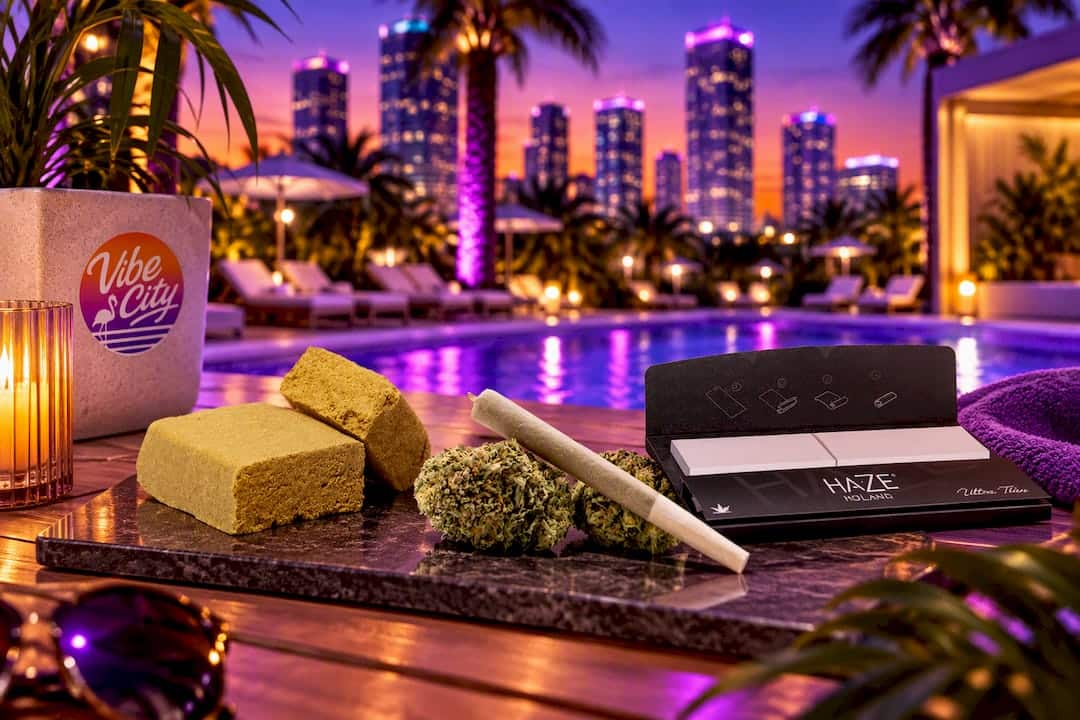
Among the available products are Yellow Cream CBD Resin, Amnesia CBD Prerolls, and Haze Amsterdam Leaf + Tips, each accompanied by information on its composition. For buyers also interested in varietal selection, high-CBD seeds clearly illustrate the genetic choices discussed above.
- Always check the COA associated with the lot before finalizing an order.
- The store offers free delivery above a certain amount, subject to its current terms and conditions.
- The complete catalogue, including flowers, oils, vapes and cosmetics, remains available on Vibecity.
To explore the entire selection and check the conformity of each item before purchase, the online store remains accessible at all times.
Sources
To verify these elements directly at the source, the Commission's declaration on CBD as a novel food and the Mildeca CBD fact sheet usefully complement the texts already cited.
This article provides general information and is not a substitute for legal advice. Consult a qualified legal professional regarding your specific situation before taking any action based on this content.
- Eur-Lex — harmonization of the THC threshold of 0.3%
- European Commission — Decisions concluding Novel Food (CBD) procedures
- EFSA — Provisional safe level for cannabidiol (2026)
- Judicial Review — Case Law Analysis (Kanavape)
- Ministry of Agriculture (DGAL) — Controls on foodstuffs containing CBD (2026)
Frequently Asked Questions
Does CBD pass through customs in Europe?
A CBD product can generally cross a European border when its THC content complies with the harmonized threshold of 0.3% and its nature corresponds to the declared status in the destination country. Keeping the Certificate of Authenticity (COA) and the purchase invoice greatly facilitates customs checks.
Will CBD be banned in France in 2026?
CBD is not banned in France in 2026, but controls on food products containing it are being significantly strengthened, with possible market withdrawals for non-compliant products. Flowers and resins with compliant THC levels remain authorized for sale since the Council of State overturned the general ban.
Is it legal to possess CBD in Europe?
Possessing CBD with a THC level that complies with the applicable limit in the country being transited is generally legal, as the Kanavape ruling confirmed that this cannabinoid is not a narcotic. However, caution is still advised when traveling between countries with different thresholds or controls.
What is the new law on CBD in France in 2026?
There is no new single law, but the DGAL (Directorate General for Food) has announced stricter administrative controls on CBD-containing products, with possible recalls for non-compliance with labeling or Novel Food status. Flowers and resins that meet the THC threshold remain authorized for sale.


